What do you actually do, Roman Schramm?
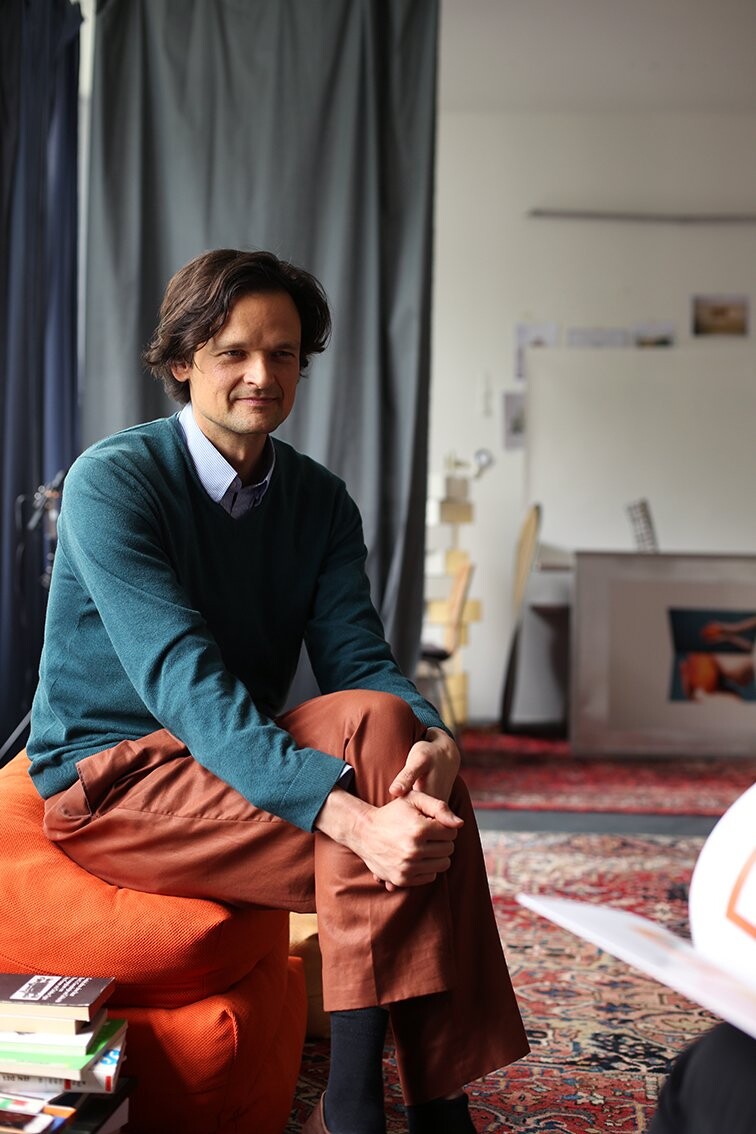
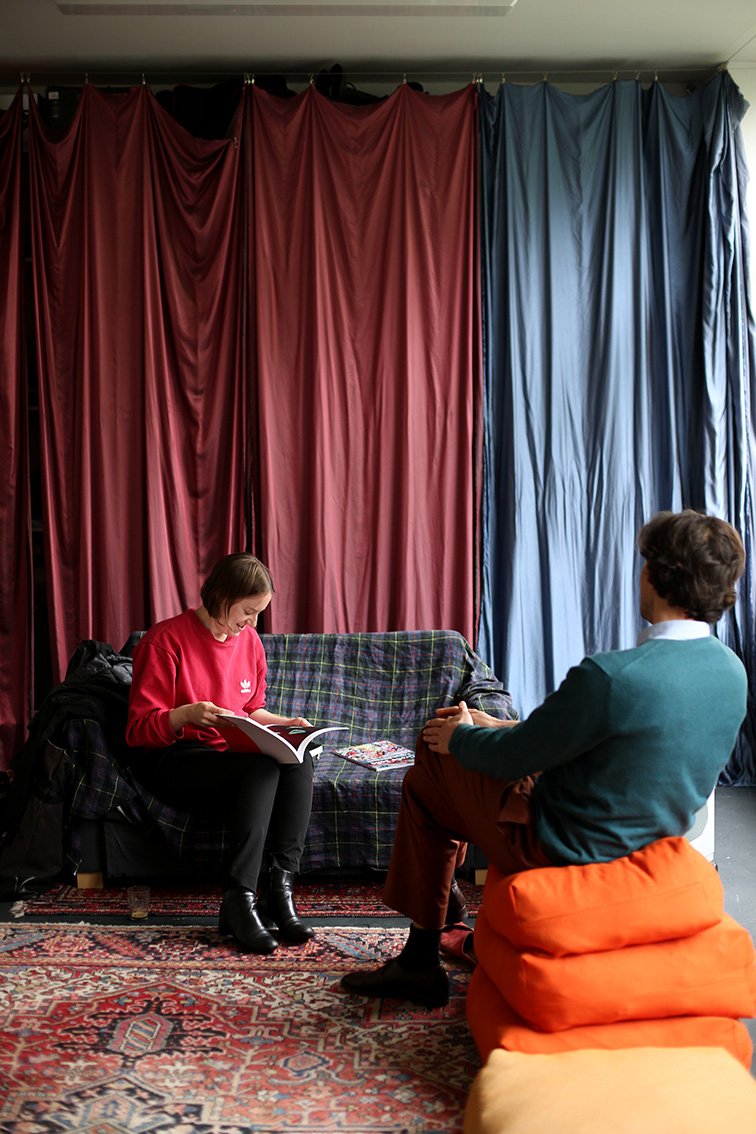
Roman Schramm in his studio in Berlin; photo: Jens Franke
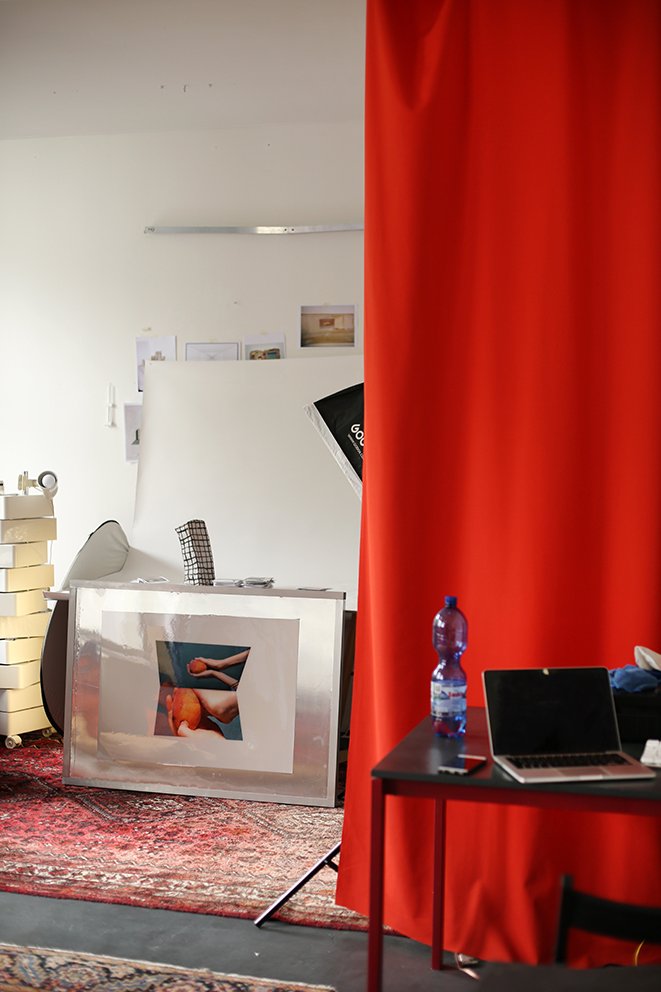
I’m over twenty minutes late when I arrive at Roman Schramm’s studio, but the photographer, dapper in a blue striped shirt and green V-neck sweater, is nothing but gracious, inviting me to relax on the sofa as he makes a pot of coffee. Located on a residential street in the Berlin district of Neukölln, the third-floor room is full of patterned rugs and jewel tone curtains, giving it a domestic feel that’s often absent from artists’ studios. Schramm tells me that he isn’t working on anything concrete at the moment, so for the past few months he’s been using the space to experiment, something he sees as a vital part of his artistic practice. “I never start with a clear topic at the beginning,” he explains. “I love to use the studio to test out different things and see where the process leads me.”
Right now, this means trying his hand at painting with watercolors, despite, he claims, being “bad” at drawing and having “hated” painting with watercolors in high school. It also seems like an oddly traditional medium for the artist, who, from the beginning of his career, has sought to expand his ideas of the photographic medium through the use of digital software such as Adobe Photoshop and Cinema 4D. But after so many years making photographs—Schramm got his first camera aged 12 and won the German Youth Photography Award several times as a teenager—he often finds himself deliberately searching for areas where he can be a novice again. “When it comes to photography I’m very precise,” he says. “Whereas in my painting and sculpting practice I’m an amateur. It kind of feels like being in kindergarten again.”
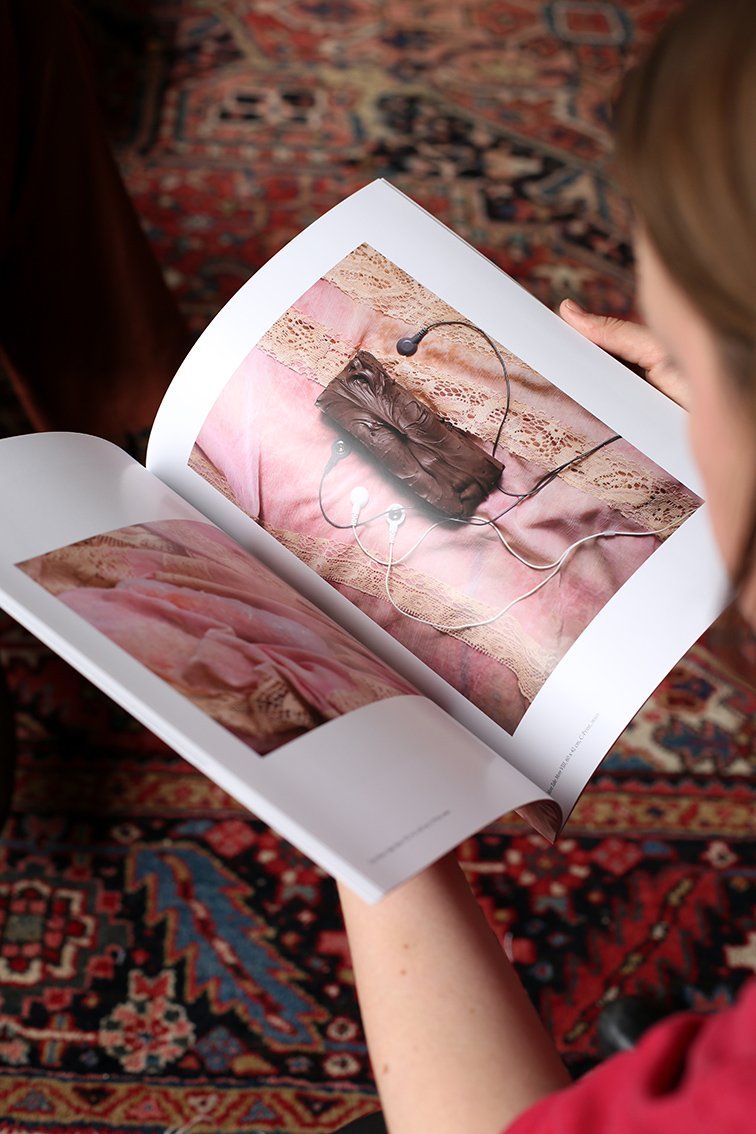
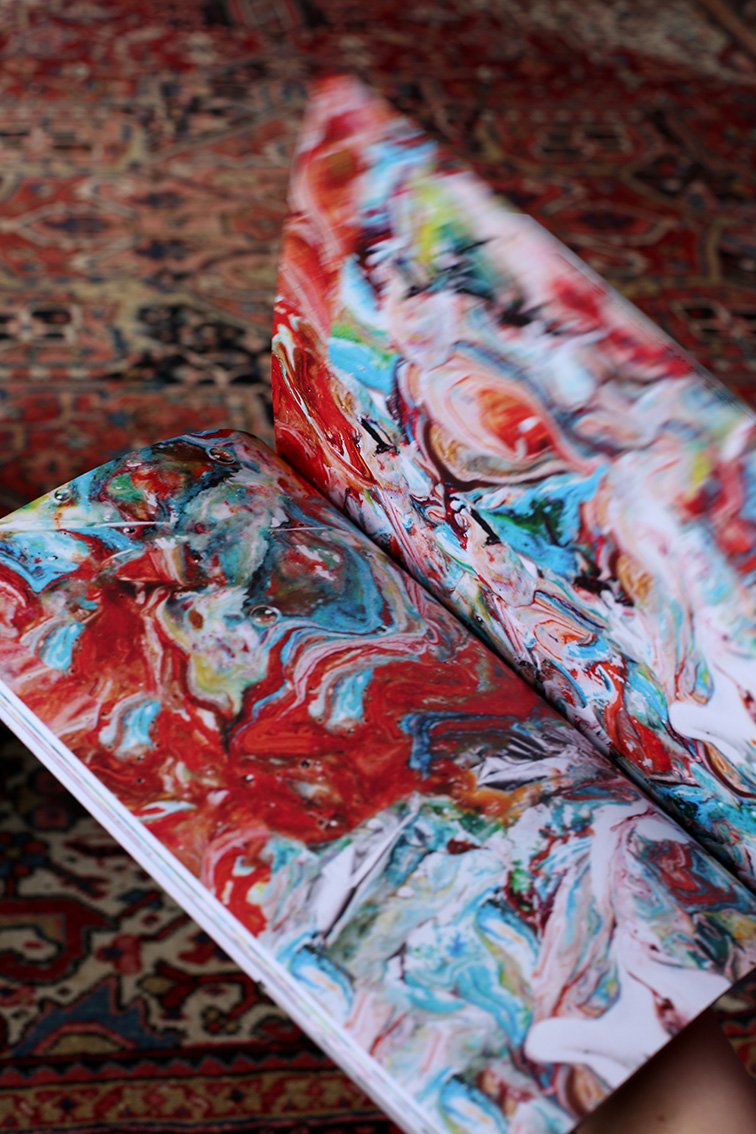
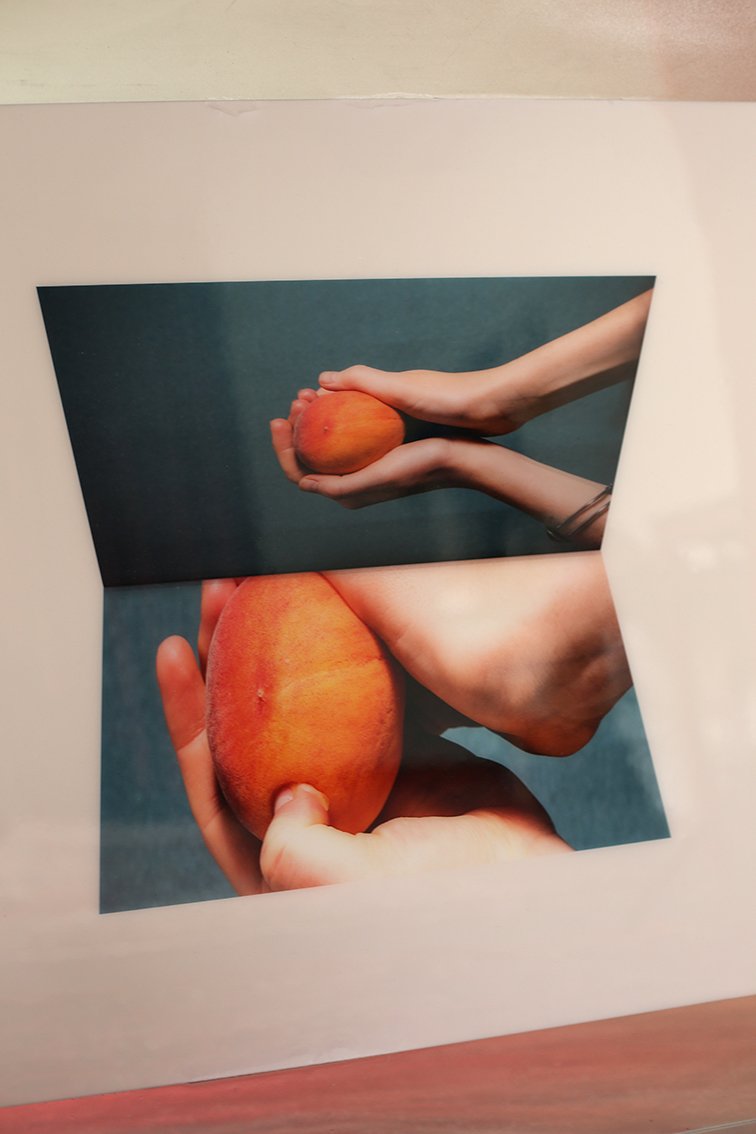
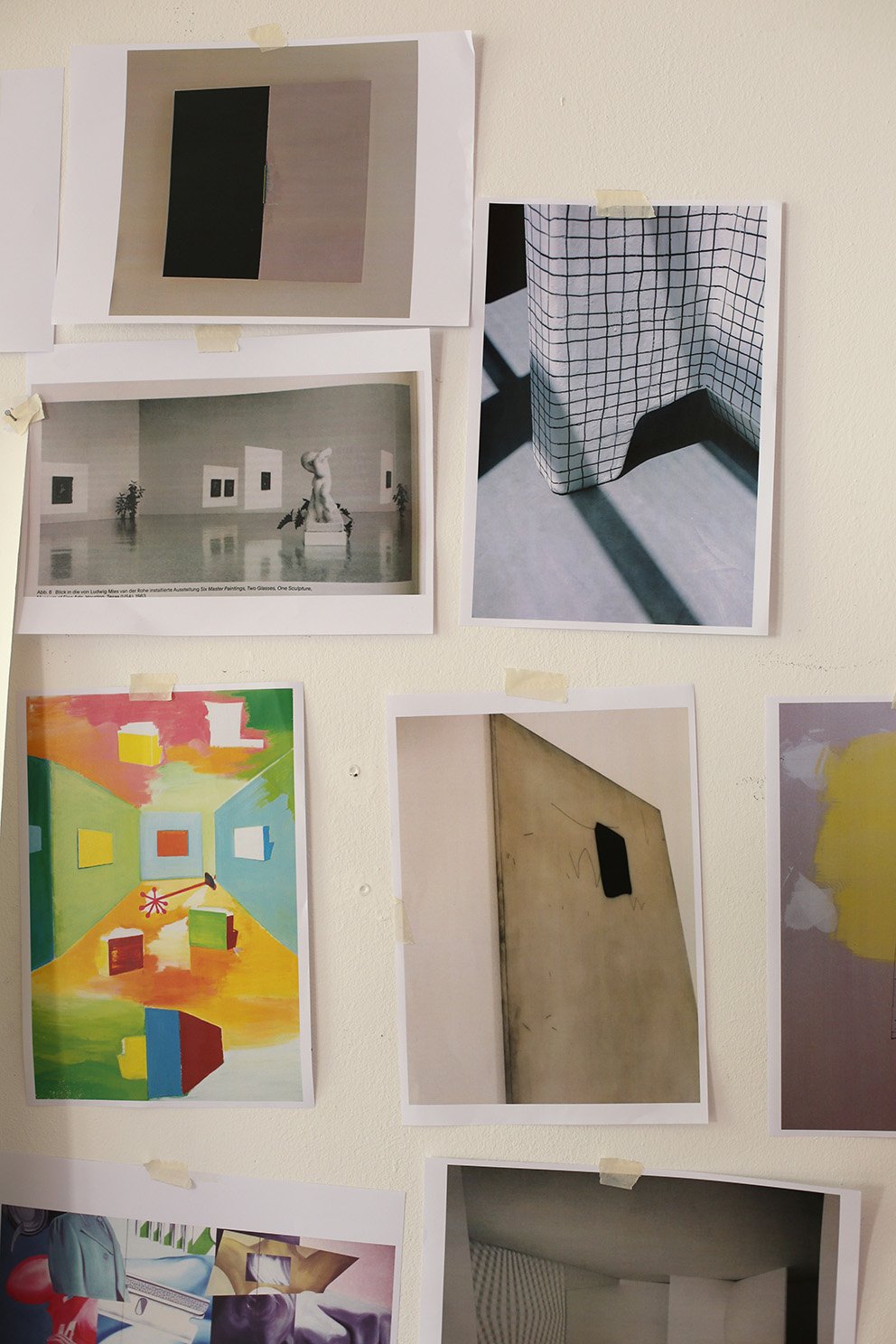
In his photographic series, Schramm attempts to bring these two approaches together, resulting in playful yet technically accomplished images that often mix the pristine visual language of advertising with something much craftier. In Give More Take More (2017), for example, he photographed crudely made clay sculptures against pink, lace-edged fabric in sumptuous detail, while for Aluminium & Resin (2015), he unceremoniously stuck slick images of an assortment of objects, including a fried egg and a set of knives, on DIY resin and aluminum frames. For his most recent project, Große Soße (Big Sauce, 2019), Schramm took the idea of going back to kindergarten a step further by photographing patterns he made with shower gel, egg yolk, and food dye, which he then combined into one image on Adobe Photoshop using its pattern recognition algorithm. The resulting candy-colored abstractions, which each measure 2 × 1.5 meters, wouldn’t be out of place in a scene from Charlie and the Chocolate Factory. For Schramm, the software benefitted this project in several ways: “Firstly, I wouldn’t be able to make a photo like that otherwise because it’s so huge,” he says, “and secondly, it’s a nice game of control and letting go. The algorithm makes mistakes and I have to decide when to correct the glitches and when to leave them alone.” The series, which Schramm showed last July at Beers London and then made into an artist book, is full of images that are equally seductive and disquieting. Seduction is a word that is often used to describe the artist’s work, but he denies that it’s his main goal. “It’s not that I want to seduce the spectator,” he says. “It’s more that at a certain point I want to be seduced or disturbed by the picture. It’s not my plan to do this with the spectator, but I know that if I’m troubled by an image then they probably will be too.” For Schramm, part of that process involves analyzing the photographs of others—something that is evident through the piles of books littered throughout his studio. “My projects used to be more research-based,” he explains. “Now I collect pictures and then let them lead me.” At the moment, he’s fixated on collages of modernist buildings by the American-German architect Ludwig Mies van der Rohe: “I’m asking myself, what’s the magic in them? Why are these images so appealing to me?”
While Schramm’s intuitive way of working keeps him excited about going to the studio every day, it also has its downsides. In an art market that encourages artists to have a recognizable brand, a practice without clear visual markers can occasionally cause confusion. “Sometimes I think it would be good to have a trademark rather than looking different each time,” Schramm admits, referring to the fact that in the same year he made the “large, colorful, and very tactile” series Große Soße he also produced The Dilated Body, a set of austere black-and-white still lives in heavy aluminum frames. “I thought, okay that’s strange,” he says with a laugh, “but I can’t change it. I like both projects!”
Roman Schram is an artist based in Berlin. He studied at the HFBK from 1999 to 2007 with Cosima von Bonin and Stephan Dillemuth. More information: https://www.romanschramm.de
HFBK graduate Chloe Stead, together with the photographer and also HFBK graduate Jens Franke, regularly meets former HFBK students to talk about work, life and art.