Female Identities in the Post-Utopian.
[esc]

[esc]
Perspectives on Post-Socialism from Art and Theory
Public Seminar with, among others,
Anabela Angelovska, Anna Bitkina, Ana Bogdanović, Anetta Mona Chişa
& Lucia Tkáčová, Suza Husse, Katja Kobolt, Elena Korowin, Petra
Lange-Berndt, Monika Rüthers, Jana Seehusen, and Bettina Steinbrügge
January 19 - January 20, 2017
While an artistic
preoccupation with questions of identity, gender and recollection of a
socialist past from women’s perspectives was not widespread in the early
2000s, today many artists from the former ‘East’ are taking on the
subject with a retrospective approach towards the future. That is to
say, they undertake retro-utopian excursions into the past in order to
discover its hidden and unresolved potential for a new understanding of
female subjectivity and gender. In a post-utopian epoch, in which
communism no longer appears to offer any promise, nor act as a utopia or
vision, it instead appears as an event of the past: a discarded
political project. Artists are now focusing anew on the socialist period
and that phase of societal shift after 1989/1991 in order to produce a
critical distance from the present and imagine a new future. Against
this backdrop, many contemporary films and video works by women artists
provide insight into gender-specific experiences and challenges to women
in the post-socialist present-day.
The Public Seminar
investigates perspectives on the post-socialist transformation as well
as on theoretical positions and discourses from art history, art theory,
visual culture studies and historical studies. On the basis of visual
readings, the following questions occur: What do female artists think
about the socialist past and subsequent processes of transformation from
a contemporary perspective? How do they position themselves in relation
to feminist positions and discourses surrounding ‘post-identity’? What
are distinctive features of the past that extend into the future? What
can we identify as the retro-utopian potential that defines female
identity and gender through some exemplary cultural works?
Concept: Lene Markusen (Hochschule für bildende Künste Hamburg) and Ulrike Gerhardt (Leuphana Universität Lüneburg)
Assistance: Sophie Krambrich
Graphic design: Julian Mader
Programme
An event hosted by the
Time-based Media department at the University of Fine Arts Hamburg in
collaboration with Kunstraum of Leuphana University of Lueneburg and
District Berlin
 Time-based Media











 Graduate Show 2025: Don't stop me now
 Long days, lots to do
 Cine*Ami*es
 Redesign Democracy – competition for the ballot box of the democratic future
 Art in public space
 How to apply: study at HFBK Hamburg
 Annual Exhibition 2025 at the HFBK Hamburg
 The Elephant in The Room – Sculpture today
 Hiscox Art Prize 2024
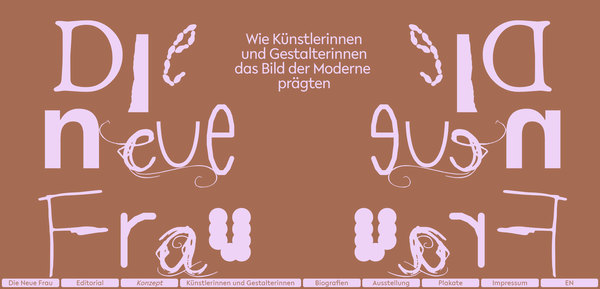
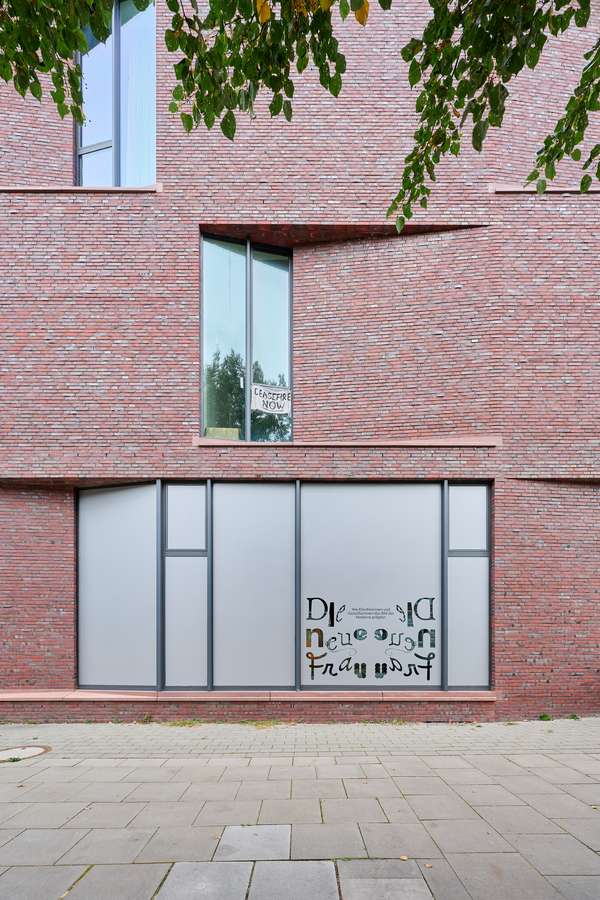
 The New Woman
 Doing a PhD at the HFBK Hamburg
 Graduate Show 2024 - Letting Go
 Finkenwerder Art Prize 2024
 Archives of the Body - The Body in Archiving
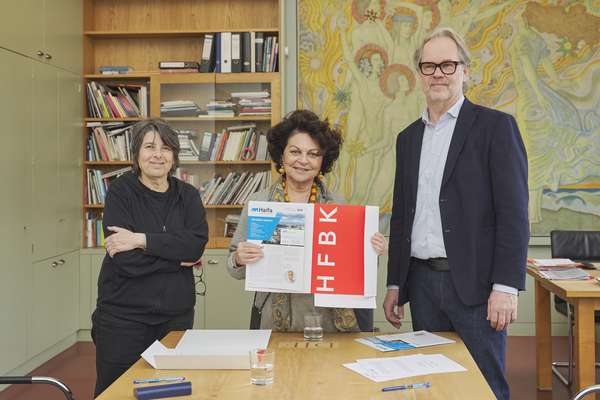
 New partnership with the School of Arts at the University of Haifa
 Annual Exhibition 2024 at the HFBK Hamburg
 (Ex)Changes of / in Art
 Extended Libraries
 And Still I Rise
 Let's talk about language
 Graduate Show 2023: Unfinished Business
 Let`s work together
 Annual Exhibition 2023 at HFBK Hamburg
 Symposium: Controversy over documenta fifteen
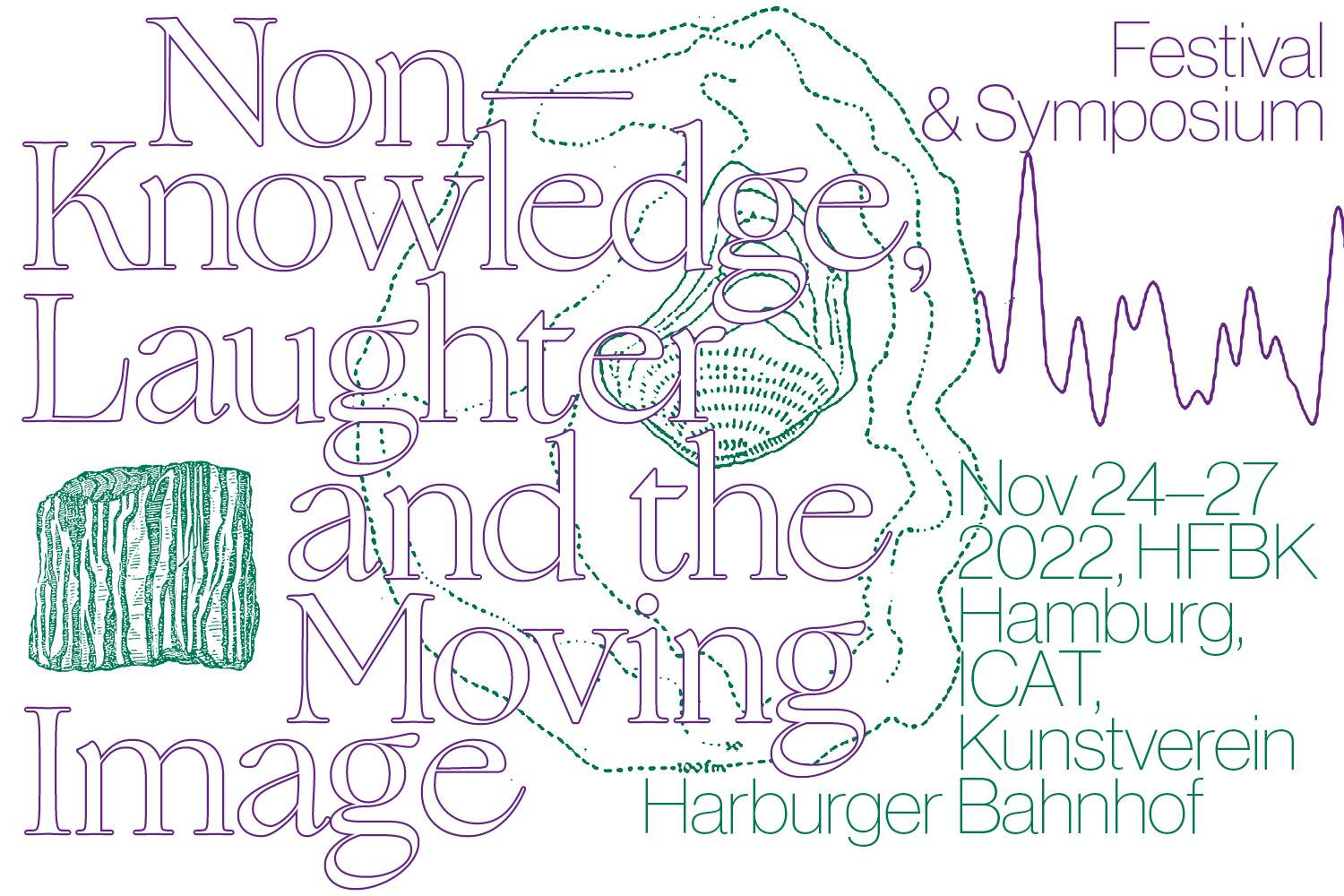
 Festival and Symposium: Non-Knowledge, Laughter and the Moving Image
 Solo exhibition by Konstantin Grcic
 Art and war
 Graduate Show 2022: We’ve Only Just Begun
 June is full of art and theory
 Finkenwerder Art Prize 2022
 Nachhaltigkeit im Kontext von Kunst und Kunsthochschule
 Raum für die Kunst
 Annual Exhibition 2022 at the HFBK
 Conference: Counter-Monuments and Para-Monuments.
 Diversity
 Live und in Farbe: die ASA Open Studios im Juni 2021
 Unlearning: Wartenau Assemblies
 School of No Consequences
 Annual Exhibition 2021 at the HFBK
 Semestereröffnung und Hiscox-Preisverleihung 2020
 Teaching Art Online at the HFBK
 HFBK Graduate Survey
 How political is Social Design?