Erasmus+ Internships Abroad
Students can pursue an internship abroad, funded by the Erasmus programme. For example, the internship can take place in museums, artist studios, or galleries.
The programme offers the following services to the students:
- Mobility grant as a contribution to the costs for travel and subsistence during the period of study abroad
- Supervision by a contact person at the home and host institution during the internship
- Support during the preparation of the study abroad period (cultural, linguistic, organisational)
- Academic recognition of the internship
- Additional support for students with disabilities
Application
There are no fixed application deadlines for Erasmus+ internships. However, it is important to note that the Erasmus+ programme provides financial support only. Students must organise a work placement for themselves.
Once students have been accepted for an internship, they can apply for Erasmus+ funding by submitting the following documents to the International Office:
- Application Form
- Acceptance by the internship provider
Due to the need to issue and complete those documents, applications should be submitted approximately two months before the start of the internship, where possible.
Funding Conditions
- Erasmus+ internships need to last between two months (60 days) and 12 months (360 days).
- Bachelor students must have completed their first year. If the internship is planned to take place during the lecture period, the second year must have been completed as well.
- Internships in EU institutions and other EU bodies including specialised agencies (a complete list can be found at europa.eu/institutions) and bodies that administrate EU programmes cannot be supported.
- Students have to be matriculated at HFBK during their whole stay abroad.
- All students participating in the Erasmus programme are required to submit certain documents (e.g. the so-called Training Agreement). Details will be communicated upon successful application by the International Office.
- The European Commission has made online linguistic support available for all 24 languages of the European Union. Taking the language test before and after the Erasmus stay is a requirement for all participating students.
- No automatic right to support exists.
- Erasmus mobilities can be supported entirely or partially with so-called zero-grants, i.e. without financial support.
- Mobility grants
Internships for Recent Graduates
Internships by recent graduates can be funded by the Erasmus+ programme within a maximum of one year after the student’s graduation – under the condition that the future graduates apply for such funding before graduation (i.e. before “Exmatrikulation”). Interested students are advised to contact the International Office at an early stage.
Special Needs
The Erasmus+ Programme aims at promoting equity and inclusion by facilitating the access to participants with disadvantaged backgrounds and fewer opportunities compared to their peers. Because of that, students with disabilities can receive additional funding to cover extra costs incurred during the internship abroad. www.eu.daad.de/engagiert
































 Graduate Show 2025: Don't stop me now
 Long days, lots to do
 Cine*Ami*es
 Redesign Democracy – competition for the ballot box of the democratic future
 Art in public space
 How to apply: study at HFBK Hamburg
 Annual Exhibition 2025 at the HFBK Hamburg
 The Elephant in The Room – Sculpture today
 Hiscox Art Prize 2024
 The New Woman
 Doing a PhD at the HFBK Hamburg
 Graduate Show 2024 - Letting Go
 Finkenwerder Art Prize 2024
 Archives of the Body - The Body in Archiving
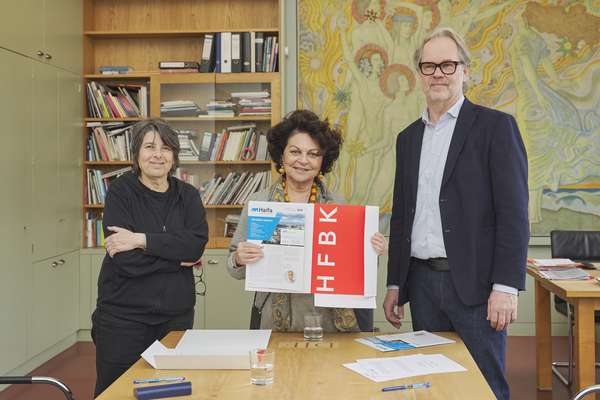
 New partnership with the School of Arts at the University of Haifa
 Annual Exhibition 2024 at the HFBK Hamburg
 (Ex)Changes of / in Art
 Extended Libraries
 And Still I Rise
 Let's talk about language
 Graduate Show 2023: Unfinished Business
 Let`s work together
 Annual Exhibition 2023 at HFBK Hamburg
 Symposium: Controversy over documenta fifteen
 Festival and Symposium: Non-Knowledge, Laughter and the Moving Image
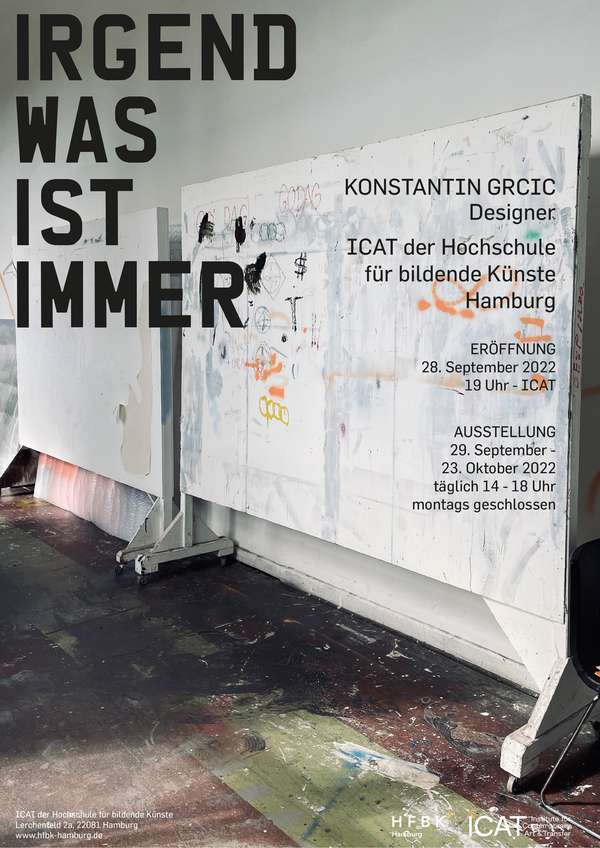
 Solo exhibition by Konstantin Grcic
 Art and war
 Graduate Show 2022: We’ve Only Just Begun
 June is full of art and theory
 Finkenwerder Art Prize 2022
 Nachhaltigkeit im Kontext von Kunst und Kunsthochschule
 Raum für die Kunst
 Annual Exhibition 2022 at the HFBK
 Conference: Counter-Monuments and Para-Monuments.
 Diversity
 Live und in Farbe: die ASA Open Studios im Juni 2021
 Unlearning: Wartenau Assemblies
 School of No Consequences
 Annual Exhibition 2021 at the HFBK
 Semestereröffnung und Hiscox-Preisverleihung 2020
 Teaching Art Online at the HFBK
 HFBK Graduate Survey
 How political is Social Design?