HFBK’s History
With the founding of the drawing school in 1767, the Hamburgische Gesellschaft zur Beförderung der Künste und nützlichen Gewerbe (Hamburg Society for the Advancement of the Arts and Useful Trades, known as the Patriotische Gesellschaft von 1765 or Patriotic Society of 1765 for short) laid the foundations for the Hochschule für bildende Künste Hamburg today. Its goal was to elevate standards of taste and design skills in craft and to provide an ambitious aesthetic education. From 1830 onwards, as a consequence of the debate concerning the setting up of a crafts school, the school, which had originally been restricted to offering architectural drawing and freehand drawing classes, significantly expanded and differentiated the education that it offered. In 1865, the city of Hamburg took over the responsibility for the institution, which had previously been financed by the guilds. From this point on, it operated as a public school of crafts. Its significance grew steadily, first as the Staatliche Kunstgewerbeschule, then subsequently as the Landeskunstschule, and, from 1955 onwards, as the Hochschule für bildende Künste, along with the success of its students both at home and abroad.
Chronicle
| 1765 | Foundation of the Gesellschaft zur Förderung der Künste und nützlichen Gewerbe [Society for the Advancement of the Arts and Useful Trades], also referred to as Patriotische Gesellschaft [Patriotic Society], and the decision to establish a drawing school |
| 1767 | Installation of the first drawing school that could be attended free of charge, initially directed by several colleagues of the architect Ernst Georg Sonnin |
| 1770 | Installation of a class for freehand drawing under Johann Anton Tischbein |
| 1789 |
Start of the French Revolution with the storming of the Bastille |
| 1790 | First annual exhibition of works by students of the drawing school organised by the Patriotische Gesellschaft |
| 1791 | Hamburg journeymen’s rebellion |
| 1793 | Introduction of the class for decoration drawing |
| 1794 | Fourth annual exhibition of the Patriotische Gesellschaft, supplemented by privately owned paintings and drawings, including works by Angelica Kaufmann and Wilhelm Tischbein |
| 1796 | Appointment of Gerdt Hardorff as teacher in the class for freehand drawing (until 1822) |
| 1802 | The proposal by Wilhelm Tischbein to restructure the drawing school modelled on the royal academies is rejected by the Hamburg Senate |
| 1806 | Start of the French occupation of Hamburg (until 1814) Foundation of the Verein zur Förderung des Kunstgeschmacks [Society for the Advancement of Artistic Taste] by the proposing secretary of the Patriotische Gesellschaft, Friedrich Johann Lorenz Meyer Demolition of the Hamburger Dom |
| 1815 | Introduction of the class for ornamental drawing Termination of the annual exhibitions of students’ works by the Patriotische Gesellschaft due to the strong presence of artistic works in comparison to the crafts |
| 1817 | Meetings of the members of the Patriotische Gesellschaft in the house of David Christopher Mettlerkamp to establish a Kunstverein [art society] |
| 1825 | Discussions at the Patriotische Gesellschaft on the transformation of their drawing classes into a vocational school |
| 1826 | Foundation of a committee for art exhibitions by members of the Kunstverein |
| 1830 | Nomination of the architect Alexis de Chateauneuf as the head of the Patriotische Gesellschaft |
| 1832 | Foundation of the Klub Hamburgischer junger Künstler [Club of Young Hamburg Artists], later named Hamburger Künstlerverein [Hamburger Artists’ Society] Modification of the Hamburg guilds’ constitution, but mandatory membership remains in place |
| 1833 | Restructuring of the drawing classes: Installation of an evening school for freehand drawing, decoration painting, architectural drawing and architectural-ornamental drawing, as well as a Sunday school |
| 1834 | First sales exhibition of the Kunstverein |
| 1842 | Great Fire of Hamburg Destruction of the headquarters of the Patriotische Gesellschaft on Johannisstraße Appointment of Martin Gensler as teacher in the field of architectural ornaments (until 1865) |
| 1844 | Introduction of a drawing class for freestyle ornaments |
| 1845–47 | Construction of a new building for the Patriotische Gesellschaft at Trostbrücke on the site of Hamburg’s burnt-down Town Hall and resumption of drawing lessons, which until then had been held in private quarters, in the third storey |
| 1848 | Elections to a constituent assembly, Hamburger Konstituante, seated in the building of the Patriotische Gesellschaft |
| 1850 | Appointment of Günther Gensler as teacher in various classes of the school |
| 1851 | The Great Exhibition in London provides a new view of the international arts and crafts |
| 1854 | Introduction of the class Modelling in all Important Materials under the direction of the sculptor Ernst Gottfried Vivié (until 1863), from 1865 proposing secretary of the Patriotische Gesellschaft Size of the school: 320 students, half of them “penniless” |
| 1858 | Foundation of the Kunst- und Gewerksektion [Arts and Crafts Section] within the Patriotische Gesellschaft chaired by Martin Gensler with the aim of motivating artists to create designs in the crafts |
| 1859 | Grand Schiller parade of the Künstlerverein von 1832 [Artists’ Society of 1832] Assembly of the first Hamburger Bürgerschaft in the building of the Patriotische Gesellschaft |
| 1860 | The first Hamburg Constitution takes effect |
| 1861 | Initial ideas to establish an arts and crafts museum proposed by the Patriotische Gesellschaft |
| 1863 | Termination of mandatory membership in guilds and start of freedom of trade in Hamburg |
| 1864 | Death of the longstanding drawing school teacher Gerdt Hardorff (*1769) |
| 1865 | Transformation of the private school of the Patriotische Gesellschaft into a state-run vocational school and a school for skilled construction workers Size of the vocational school: 247 students Location: still in the third storey of the Patriotische Gesellschaft at Trostbrücke Director: Otto Jessen (until 1880) |
| 1868 | Expansion of the vocational school by a vocational day school for freehand and compass drawing |
| 1869 | Opening of the Hamburger Kunsthalle |
| 1870 | Hamburg’s first School Law declaring education and training tasks of the state |
| 1874 | Foundation of the Kunstgewerbemuseum [Arts and Crafts Museum] in temporary spaces at St. Annen |
| 1876 | Inauguration of the new building for the vocational school at Steintorplatz Size of the school: 1,500 students Introduction of the class for decorative painting at the vocational day school |
| 1877 | Opening of the Museum für Kunst und Gewerbe [Museum of Arts and Crafts] in the new building of the vocational school Director of the museum: Justus Brinckmann (until 1915) |
| 1880 | New director of the vocational school: Adolph Stuhlmann (until 1897) Size of the school: 2,273 students |
| 1886 | First director of the Hamburger Kunsthalle: Alfred Lichtwark (until 1914) |
| 1893 | Start of the state-run, vocational day school in the building at Steintorplatz 24 subjects are taught in specialist classes |
| 1896 | Opening of the Staatlichen Kunstgewerbeschule [State Arts and Crafts School] as part of the vocational day school Introduction of nude drawing |
| 1897 | Foundation of the Hamburgischer Künstlerclub [Hamburger Artists’ Club] in Café Felber at Steindamm |
| 1905 | New director of the Kunstgewerbeschule [Arts and Crafts School]: Richard Meyer (until 1929) Efforts to acquire an own buildingNumerous new appointments of teachers including Willy von Beckerath (1907–1931 figurative wall painting), Arthur Illies (1908–1933 painting/drawing), Wilhelm Niemeyer (1911–1938 art history), Richard Schmidt (1907–1945 spatial art), Johannes Schulz (1910–1945 printing/graphic art), Eduard Steinbach (1906–1939 painting), Julius Wohlers (1908–1931 painting) and above all teachers from abroad, such as the Swiss Johann Michael Bossard (1907–1944 sculpture) and the Viennese Carl Otto Czeschka (1907–1943 planar art/applied graphic art), Franz Karl Delavilla (1909–1912 textile art), Anton Kling (1908–1923 decorative painting /glass painting) and Richard Luksch (1907–1934 sculpture) |
| 1909 | Size of the Arts and Crafts School: 4,000 students Plans for two relief buildings: Staatliche Kunstgewerbeschule [State Arts and Crafts School] at Lerchenfeld and the Technische Staatslehranstalt [Technical College] at Berliner TorMaria Brinckmann is appointed as the first female teacher, initially for art embroidery, then from 1916 as head of the textile workshop (until 1932) |
| 1910 | Relocation of the School of Applied Arts, with 683 students, to a provisional barracks building specially constructed for the school’s needs at Spaldingstraße 91, as well as to a converted elementary school building on the nearby Rosenallee. |
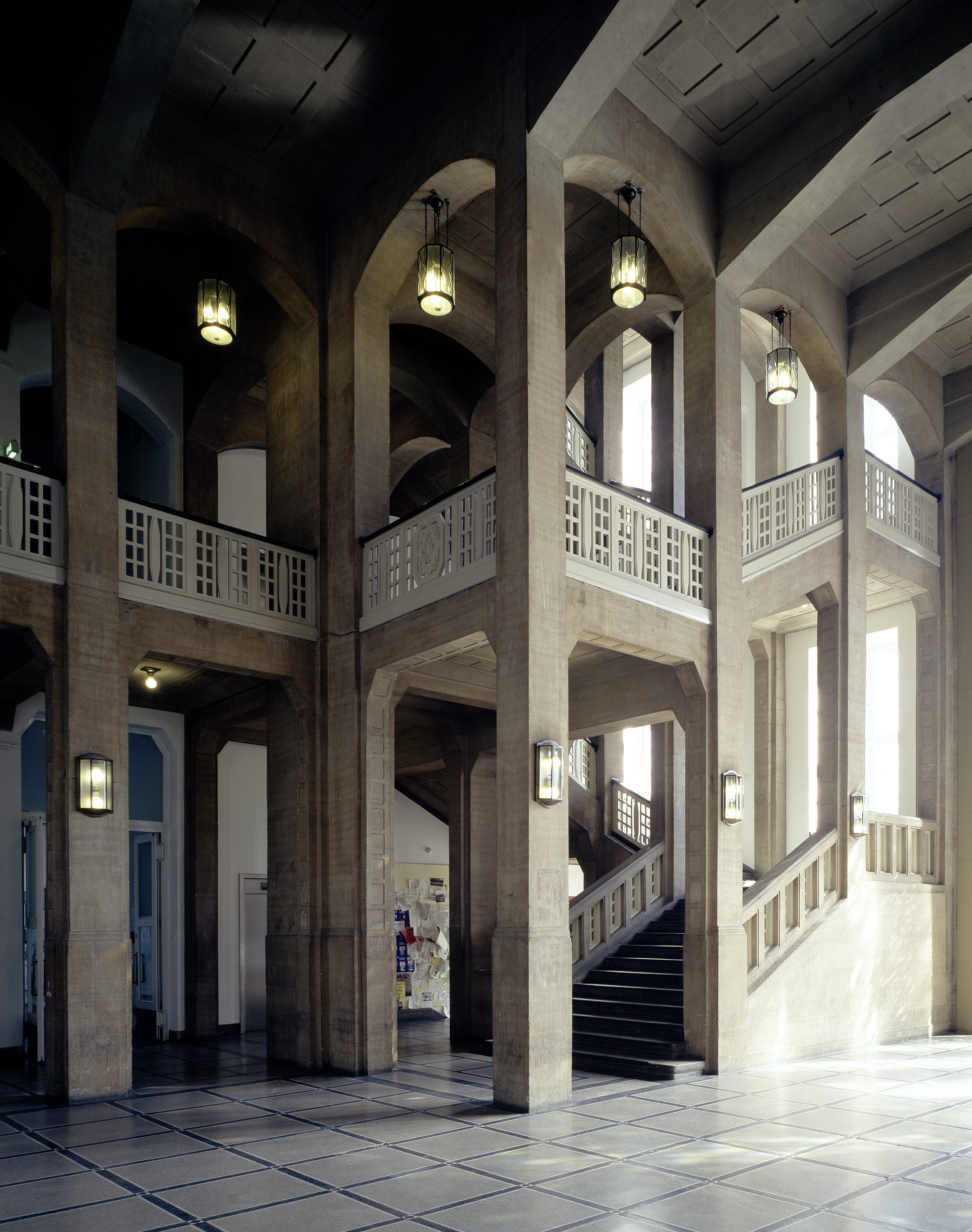
| 1911 | Start of construction work of a building at Lerchenfeld designed by Fritz Schumacher |
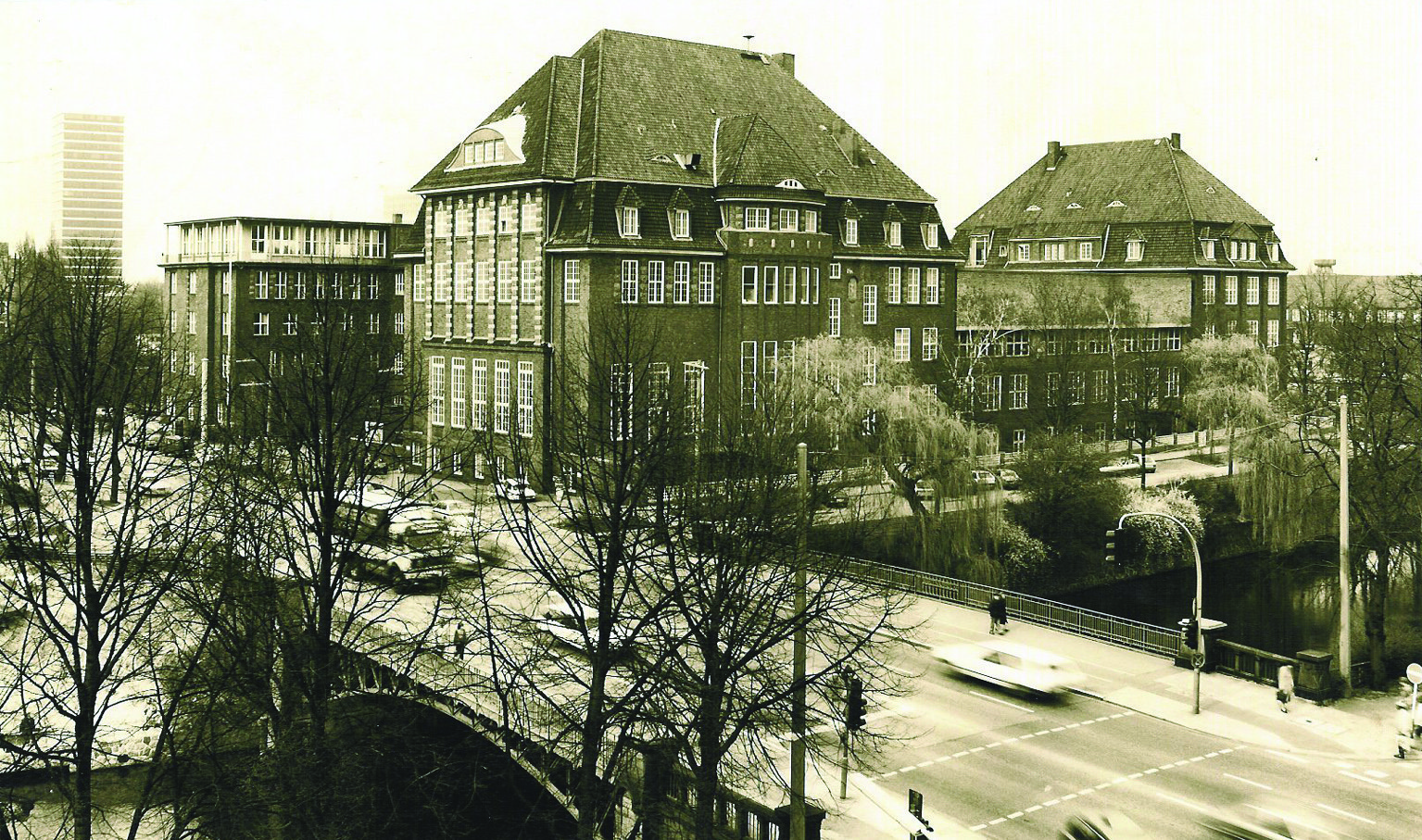
| 1913 | Opening of the new building of the Staatliche Kunstgewerbeschule [State Arts and Crafts School] at Lerchenfeld to which belong numerous workshops, greenhouses and a zoo Size of the school: 1,088 enrolled students |
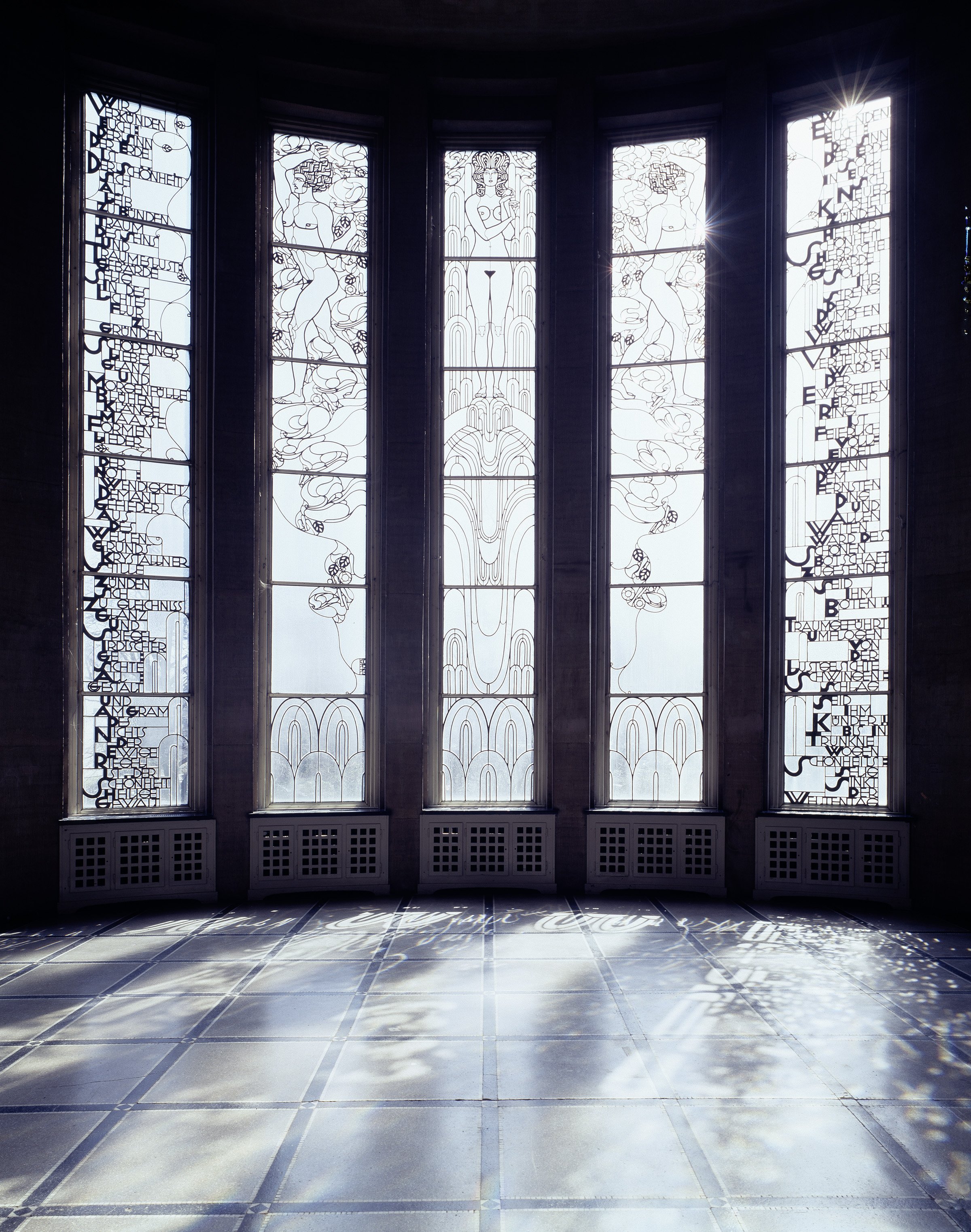
| 1914 | Cologne Werkbund Exhibition with a full-size replica of the auditorium entrance hall with window apse by Carl Otto Czeschka First artists’ festival at Lerchenfeld under the motto Futurumbumbum |
| 1914–1918 | First World War: the Lerchenfeld building serves as a military hospital, school activities are suspended |
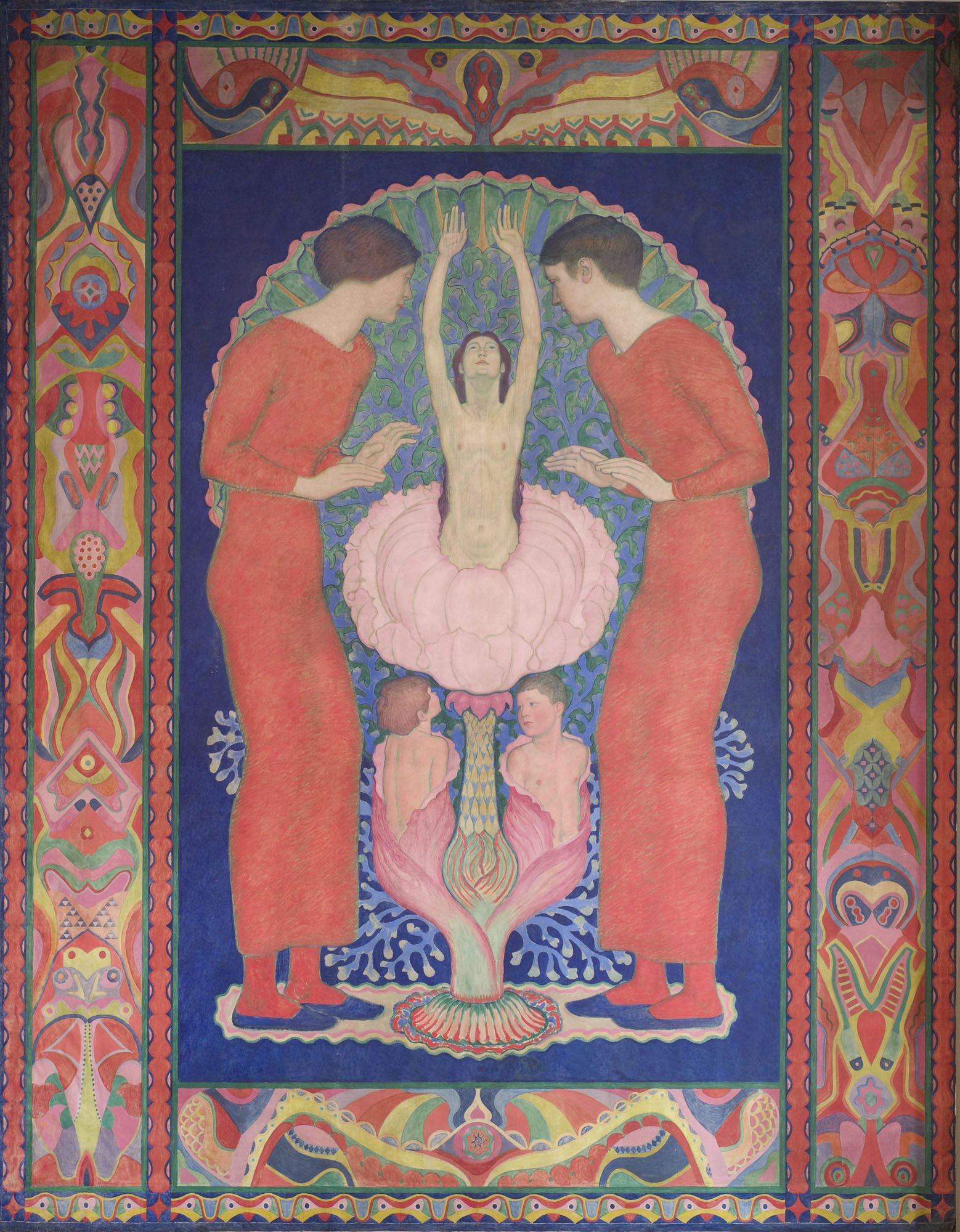
| 1918 | Ceremony dedicated to the completion of the wall painting Die Ewige Welle [The Eternal Wave] by Willy von Beckerath in the auditorium with a speech held by Aby Warburg |
| 1919 | Foundation of the University of Hamburg Foundation of the Hamburgische Sezession |
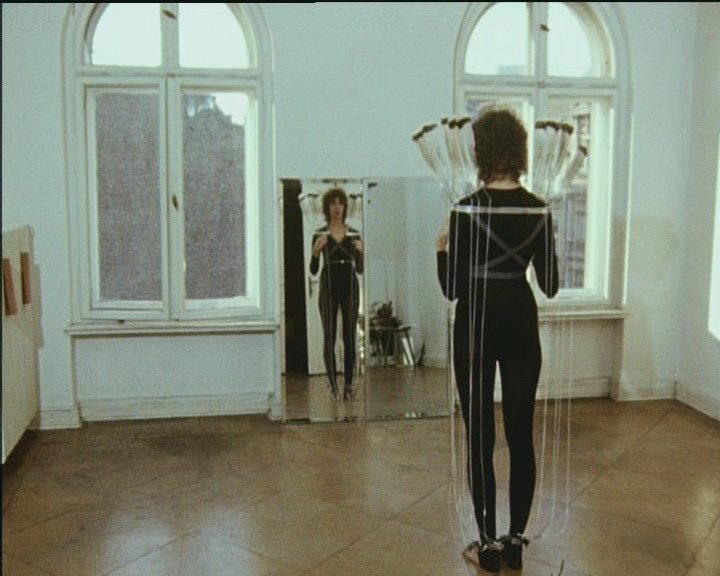
| 1919 | Foundation of the Kampfbühne by Lothar Schreyer with seven performances in the auditorium: Kräfte and Die Haidebraut by August Stramm, Hölderlin’s Empedocles, Lothar Schreyer’s Kreuzigung, Mann and Kindsterben , as well as Herwarth Walden’s Spiel an der Liebe, Sünde (until 1921), collaboration with Lavinia Schulz and Walter HoldtEstablishment of artists’ festivals organised by the Arts and Crafts School in the Curio building under annually alternating mottos: Die gelbe Posaune der Sieben (1920), Die Götzenpauke (1921), Himmlischer Kreisel (1922), Cubicuria. Die seltsame Stadt (1924), Der siebente Krater (1925), Noa Tawa (1926), Prisma im Zenith (1928), Synthetisches Klanglichtspiel (1930) |
| 1921 | First year of the art magazine Die Kündung, 12 issues, edited by Wilhelm Niemeyer and Rosa Schapire and produced by the hand printing workshop at Lerchenfeld for the members of the Kunstbund Hamburg founded in 1920 (from 1923 named Freunde der Kunsthalle) |
| 1928 | Renaming to Landeskunstschule [State School of Arts] with the aim of acquiring the status of a university |
| 1929 | Foundation of the Kartell Hamburger Künstlerverbände [Cartel of Hamburg Artists’ Associations] Director at Lerchenfeld: Paul Helms (until 1930) |
| 1930 | Director at Lerchenfeld: Richard Schmidt (until 1931) |
| 1931 | Director at Lerchenfeld: Max Sauerlandt (until 1933), who as an art historian is simultaneously the director of the Museum of Arts and Crafts |
| from 1933 | The National Socialists seize power: deposition of director Max Sauerlandt at the instigation of the Kampfbund für deutsche Kunst [Militant League for German Art] Change of directors in rapid succession: Hermann Maetzig (until 1934), Wilhelm Freiherr Kleinschmit von Lengefeld (until 1935), Paul Fliether (until 1942), Paul Helms (until 1945) Renaming to Hansische Hochschule für Bildende Künste [Hanseatic College of Fine Arts] Exclusion of the teachers Friedrich Adler, Alfred Ehrhardt, Hugo Meier-Thur, Fritz Schleifer, and Karl Schneider, as well as numerous students |
| 1943 | Destruction of the western building and the studio wing during the Allied bombing raid Operation Gomorrah |
| 1945 | New constitution as Landeskunstschule [State Art School] under the director Friedrich Ahlers-Hestermann (until 1950)Resumption of teaching activities in January 1946 with the newly appointed professors Wilhelm Grimm (1946–1969 painting), Ivo Hauptmann (1946–1951 painting), Alfred Mahlau (1946–1959 free graphic art), Gerhard Marcks (1946–1950 sculpture), Edwin Scharff (1946–1955 sculpture) |
| From 1950 | Director: Gustav Hassenpflug (until 1956) Establishment of the artists’ festival LiLaLe as an annual constant in Hamburg’s cultural life following the preceding events Arche Nova (1947) and SiSaSu (1949)Restoration and expansion of the Lerchenfeld building with, among other things, the construction of the so-called Laterne [Lantern] on the west wing designed by Hassenpflug (1953) |
| 1951 | Architecture, until then taught only as a postgraduate course, becomes an independent course of studies |
| 1953 | Introduction of the principle of visiting lecturers with the first visiting professors of painting: Georg Meistermann, Ernst Wilhelm Nay and Fritz Winter |
| 1955 | Designation as Hochschule für bildende Künste [University of Fine Arts] by the Senator of Culture Hans-Harder Biermann-Ratjen |
| 1956 | Appointment of the first female professor: Margret Hildebrand for textile design (until 1981) |
| 1957 | Director: Hans-Werner von Oppen (until 1964) |
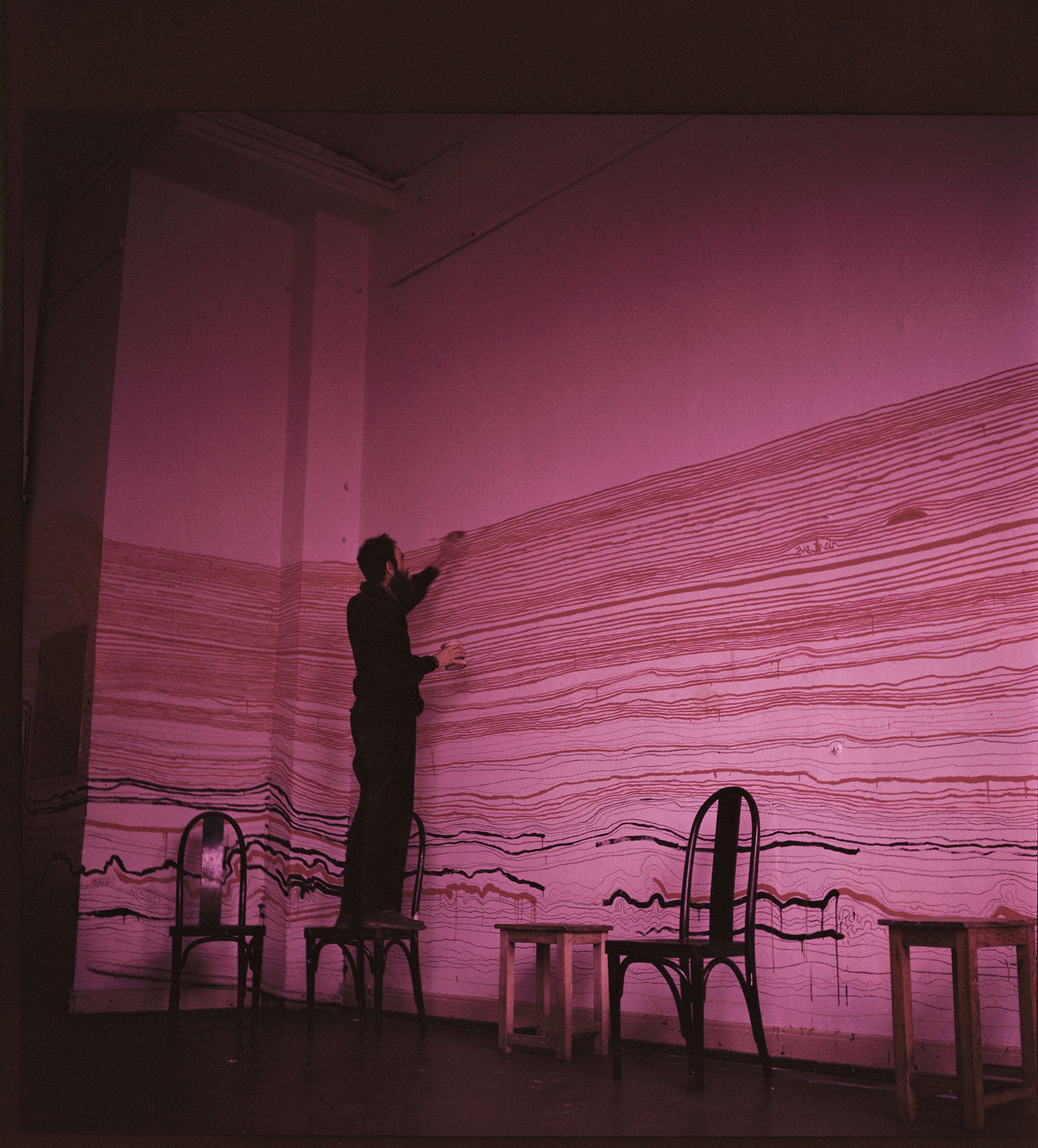
| 1959 | The action Endlose Linie/Die Linie von Hamburg by Friedensreich Hundertwasser, Bazon Brock, and Herbert Schuldt is presented at Lerchenfeld but prematurely halted after three days |
| 1964 | Director: Herbert Freiherr von Buttlar (until 1976) Establishment of the departments of industrial design and visual communicationInternationalisation of the visiting professors with, among others, Joannis Avramide (1966/67), Miguel Berrocal (1966), Dan Graham (1976), Renato Guttuso (1968), David Hockney (1969), Allen Jones (1968–1970), Richard Lindner (1965), Peter Phillips (1968/69), Joe Tilson (1970–1972), alongside renowned German artists, such as Bernd and Hilla Becher (1971–1973), Josef Beuys (1974/75), Hans Haacke (1973–1976), Sigmar Polke (1970/71), Gerhard Richter (1967), Thomas Schütte (1976/77) |
| 1970 | Raising to the status of an artistic-scientific university Reinstallment of the glass windows of Carl Otto Czeschka in the auditorium entrance hall |
| 1971 | The building is placed under monument protection |
| 1977 | President: Carl Vogel (until 1989) |
| 1984 | Introduction of diplomas in free art and visual communication |
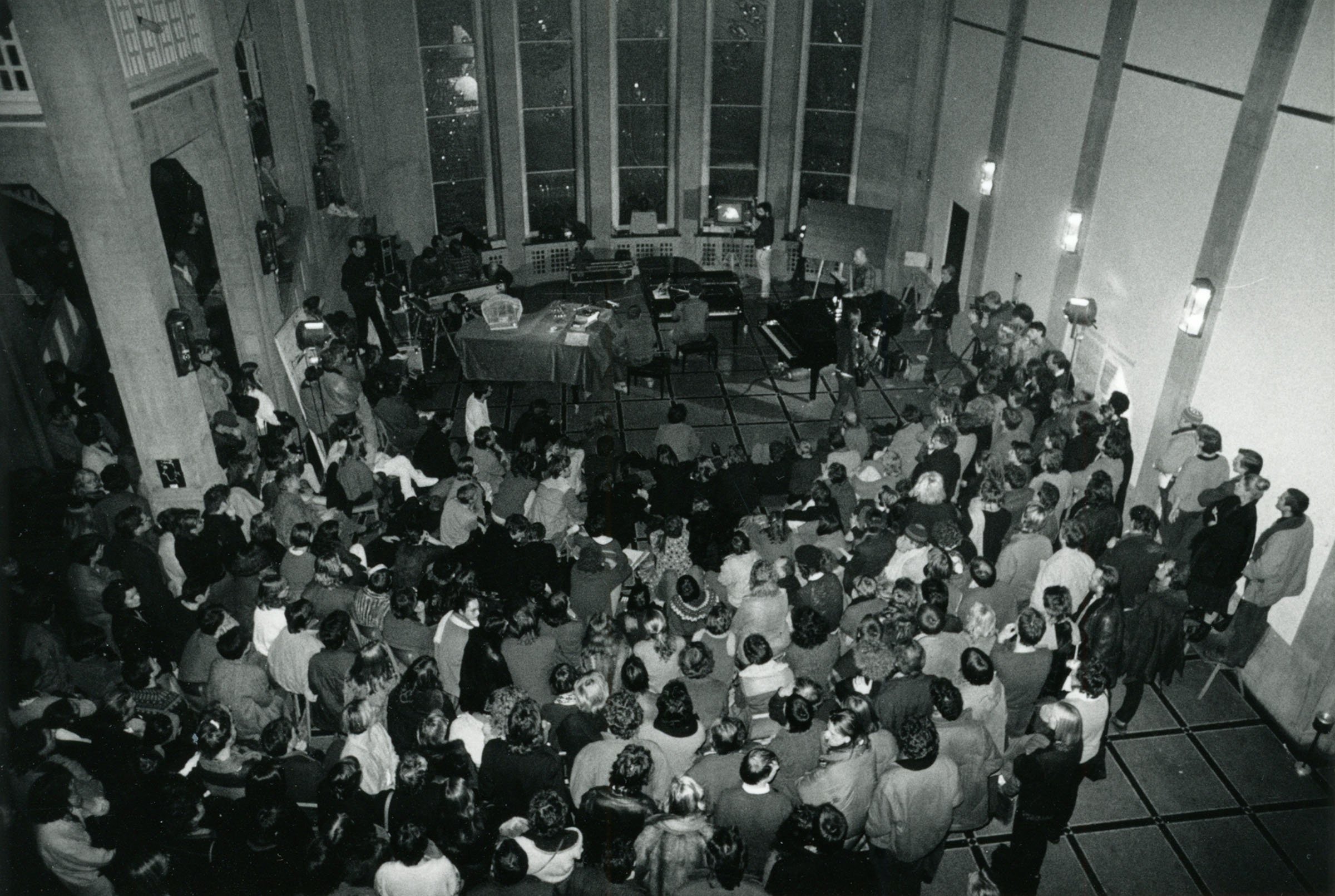
| 1985 | Biennale des Friedens [Biennale of Peace] by Robert Filliou and René Block in the auditorium entrance hall with a simultaneous concert held by Nam June Paik, Henning Christiansen and Joseph Beuys |
| 1989 | First female president: Adrienne Goehler (until 2001) |
| 1992–1993 | Redesign of the entrance area by Bernhard Winking |
| Since 2002 | President: Martin Köttering Increase in the number of female teachers through the new appointment of numerous female professors including Jeanne Faust (video/time-based media), Geelke Gaycken (basics of sculpture), Jutta Koether (painting/drawing), Annika Larsson (basics of time-based media), Julia Lohmann (basics of design), Hanne Loreck (art and cultural studies), Astrid Mania (art critique and the art history of modernism), Michaela Melián (mixed media/acoustics), Heike Mutter (basics of graphic art/typography/photography), Michaela Ott (aesthetic theories), Katharina Pethke (basics of film), Marjetica Potrč (social design), Angela Schanelec (film), Bettina Uppenkamp (art history) and Lena Ziese (art education) |
| 2006 | Constitution of the HafenCity University to which the study area of architecture is transferred from the HFBK |
| 2008 | Introduction of the interdisciplinary study course Bildende Künste [Fine Arts] with Bachelor and Master degrees as well as Dr. phil. in artibus with artistic-scientific doctorate |
| 2010 | Foundation of the Art School Alliance with initially six international partner universities: Boston – School of the Museum of Fine Arts; Hangzhou – China Academy of Art; London – Goldsmiths, University of London, Department of Art; Paris – École nationale supérieure des Beaux-Arts; San Francisco – San Francisco Art Institute; Vienna – Academy of Fine Arts; student exchange including special artists’ studios on Karolinenstraße |
| From 2011 | Restoration of the auditorium and the wall painting Die Ewige Welle [The Eternal Wave] by Willy von Beckerath |
| 2013 | Celebration of the 100th anniversary of the Fritz Schumacher building at Lerchenfeld Takeover and renovation of the building Wartenau 15 |
| 2015 | Launching of an artistic-scientific doctorate graduate programme with 12 doctoral candidates Modernisation and reconstruction of the library |
| 2016 | Makeover and redesign of the Mensa [canteen] Plans for the new construction of a studio building with 3,000 square metres at Lerchenfeld with an international architecture competition become concrete (completion in 2019) |
| 2017 | Festival week on the occasion of the university’s 250th anniversary – including contributions from faculty and students of the international partner institutions of the Art School Alliance |
| 2020 | Reorientation of art education at HFBK Hamburg. Teaching at the HFBK continues despite Covid, and the building remains open to students under safety measures |
| 2021 | Start of the Artists-in-Residency and guest lectureship program focusing on international artistic research in the Global South, including opportunities for protective residencies for at-risk artists |
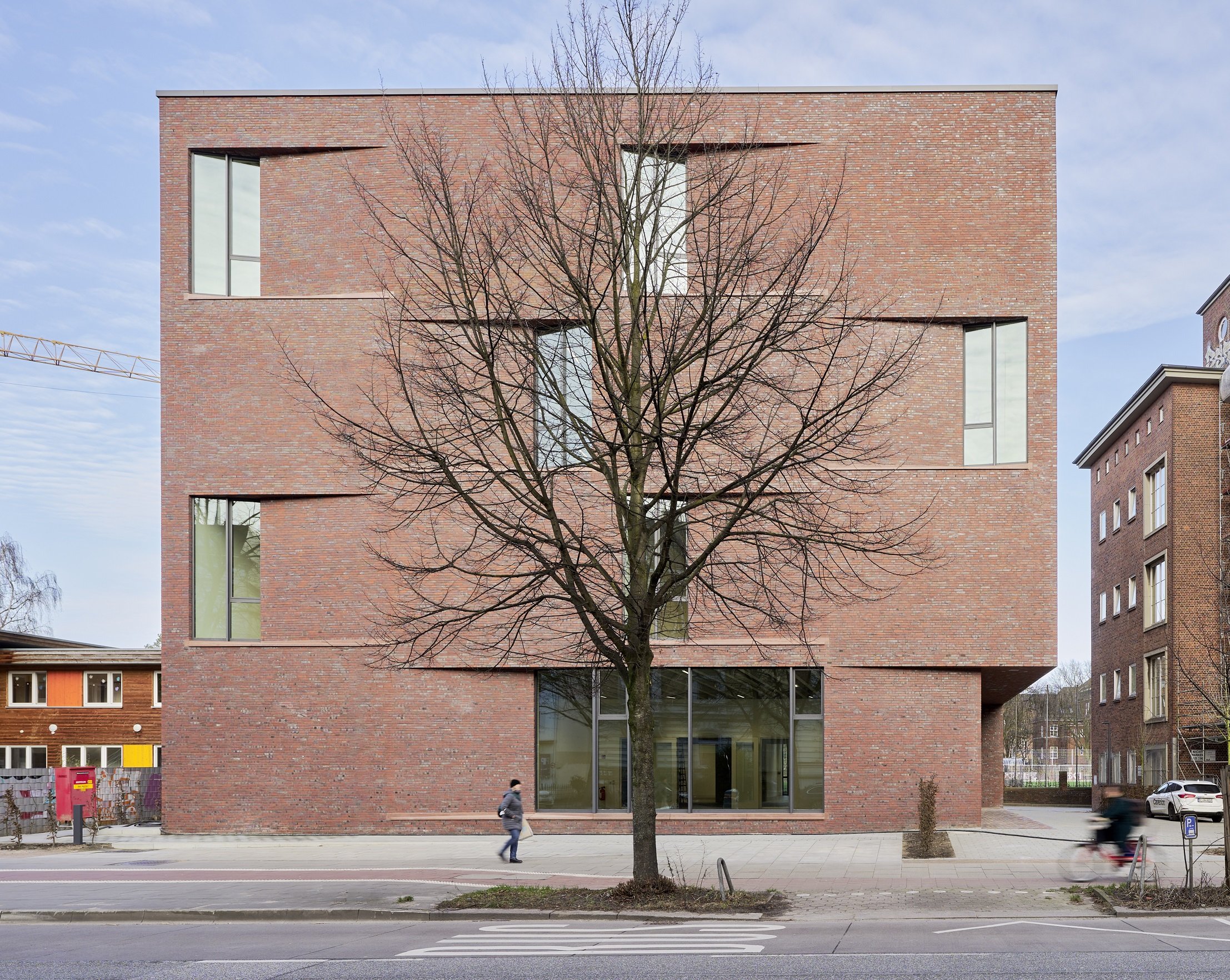
| 2022 | Inauguration of the new studio building for Master’s students, designed by Winking Froh Architekten. Founding of ICAT – Institute for Contemporary Art & Transfer – featuring two new gallery spaces and a multifunctional event space with a professionalization program on the ground floor of the studio building. As a center for critical art practice and theory, ICAT addresses a diverse audience through its events, exhibitions, workshops, and publications. With new partner institutions in Kampala, Uganda, and Lagos, Nigeria, the Art School Alliance network now spans five continents |
| 2023 | Opening of the Extended Library as an expansion of the existing library. The transdisciplinary learning, working, and discourse space is designed by the Hamburg architecture firm asdfg |
| 2024 | After six decades of film education at HFBK Hamburg, the inauguration of the new Film House, complete with its own cinema, is celebrated in grand fashion at the start of the semester on October 16, 2024 |
| 2025 | The new PhD in Art Practice program launches as the only nationwide pilot project for practice-based artistic doctorates, expanding postgraduate studies at HFBK Hamburg |