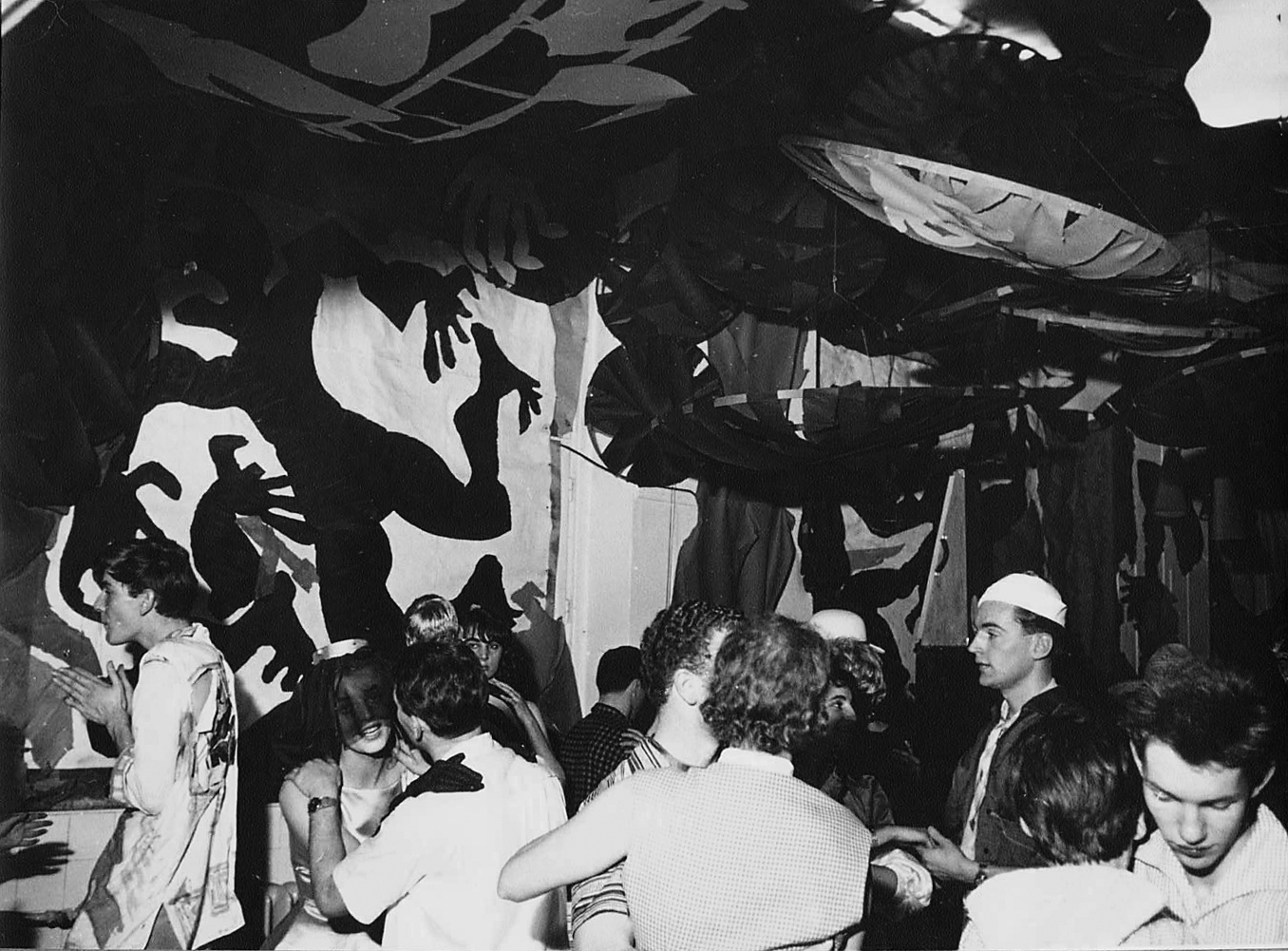
Li-La-Le-carnival 1959, stage decoration attributed to former HFBK student Mildred Thompson; Photo: Rolf Franck.
Rewriting Histories: The International Alumni Archive at HFBK Hamburg
Beate Anspach: How did the idea for The International Alumni Archive (TIAA) come about? Was there a specific trigger or motivation?
Astrid Mania: The initial impetus came from my friend and colleague Bea de Souza who, in 2021, invited me to a conference. She was part of the research project “Multiple Artistic Mobilities – Travelling Artists from/to African Countries and European German-Speaking Countries (MAM).” Would I be willing to speak about Gavin Jantjes’ time at HFBK? To be honest, I was pretty clueless. As it turned out, Gavin Jantjes was one of the few students who had, as a PoC, come to HFBK in the 1970s from an African country, South Africa in his case. And what’s more, his probably most famous, and certainly most critical work, A South African Colouring Book, an acerbic take on Apartheid, was made during his time at HFBK. More so, he was instrumental in organizing the 1973 exhibition “Ausländische Studenten der HBK” which featured 23 international students from that time. The catalog is being kept at HFBK’s archive, and with the help of you, Beate, and Julia Mummenhoff, more information on this period came to light. I was amazed that I hadn’t heard of any this, especially since one of my responsibilities at HFBK is to take care of our international students. This had to change, I felt. Our international students should have a history, feel historical, so to say. I think it makes a difference whether you think you are, for instance, one of the first students from an African country, or whether you know of and can read about others who came before you.
Nicholas Mboya: The idea for this project began when Astrid approached me at the annual exhibition party in 2022. She shared her vision of focusing on the international alumni of HFBK, which really caught my interest. At that time, the idea was still in the early stages, but I was excited by it and grateful to be invited to participate. Fast forward to the winter semester of 2024/25: Astrid reached out again with a fantastic opportunity to help her with the project. This time, she shared more details, including an ongoing website and a list of over 600 alumni from around the world who studied at HFBK between 1945 and 1985. I became particularly fascinated by the African alumni and was eager to explore why they chose to study art in Germany during that time. This interest deepened my excitement for the TIAA project.
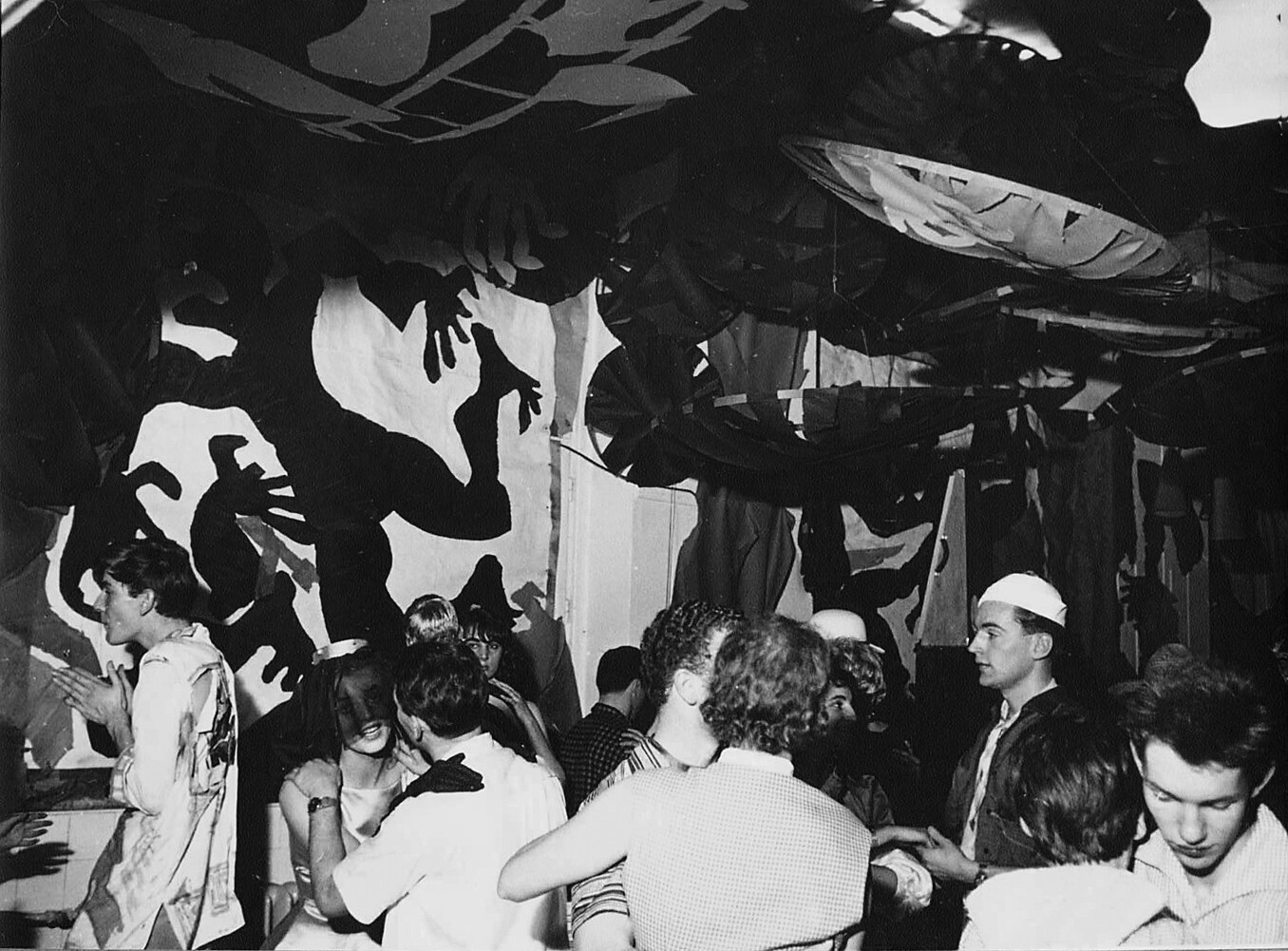
Li-La-Le-carnival 1959, stage decoration attributed to former HFBK student Mildred Thompson; Photo: Rolf Franck.
Beate Anspach: What gap in art history or HFBK-history is this archive intended to fill?
Astrid Mania: When we think of famous HFBK alumni, who springs to mind? Not Gavin Jantjes, not Ahmed Atta, nor Chow Chung-cheng. None of them became as famous as some of the international alumni from later generations like, for instance, Santiago Sierra, but that’s the topic for a TIAA essay I will write someday… So, first, we need to know who was here. There’s a historical, and subsequently, narrative gap to fill. At this stage, we are looking at the data for the years 1945–1985 (thank you, Eliane Kölbener, for compiling them!). This raises so many questions. Who were the international students from that time? Where did they come from? Why, especially after 1945, would someone come to West-Germany? What were their studies like? After all, some of them are still around and are kind and generous enough to talk to us. About their lives at HFBK in the 1970s. About what they’re doing now. We have to date found so many interesting paths of life. Obviously, not everybody continues their artistic practice. We came across an activist, a TV arts education pioneer, others became teachers in their home countries where they had a major impact on a younger generation. In the end, this archive will, hopefully, as it grows, provide data as much as individual biographies, information on HFBK’s general history, and insights into a broader geopolitical and socio-economic framework: who was in a, not only financial, position to study abroad? What kind of institutional support did students get at the time? I am getting carried away …
Beate Anspach: Why did you decide on a digital format for the archive instead of a traditional publication?
Astrid Mania: As much as I’m into print and paper, the digital format does have enormous advantages. The way the website has been designed – and let me say thank you to my colleagues Christoph Knoth and Konrad Renner and their students Dongseok Lee and Yelyzaveta Musiienko for doing so – is very visual. The landing page shows a globe with dots on it. Every dot represents the hometown of an international student from the period 1945–1985. Every dot that has a name next to it leads to an entry, that is biographical information. So just by looking at the globe, you understand politics and economics, as you can see where the dots accumulate, and where not. Plus, as it’s an archive in progress, we can add and edit at any stage – texts, images.
Beate Anspach: You are involving current students in the project, asking them to research selected alumni. What do the students gain from this work? What do they (do you) learn about that period, HFBK, and about themselves?
Nicholas Mboya: I believe that students gain a deep understanding of research through hands-on experience and by learning how to effectively communicate their ideas. This process can be slow, which teaches them the importance of patience while still striving for meaningful outcomes. Additionally, students have the freedom to choose which alumni they want to connect with. This not only helps them learn about Germany, especially Hamburg, and the HFBK school during the time those alumni were students, but also allows them to see how those experiences influenced the alumni’s work. They can identify lasting trends, recognize what has changed, and consider what practices might be worth adopting or adapting for the future.
Astrid Mania: Ideally, our students learn how to research, in both the digital and analogue realms. And learn how to write an essay, unless they choose another format. We are of course offering support for both. Beyond that, it’s hard for me to answer this question as I’m not a student, but from the feedback I received, it was obviously very important for some of our students to, as I said earlier on, feel historical, to connect to alumni from their home countries, even though in many cases this connection is via research only and sometimes even fiction. But I would like to also acknowledge what our students bring to this project. TIAA very much depends on the different cultural backgrounds and the many languages spoken by our students. Their expertise grants access to documents as well as archives who are written in and obviously people who speak in languages other than, for instance, English.
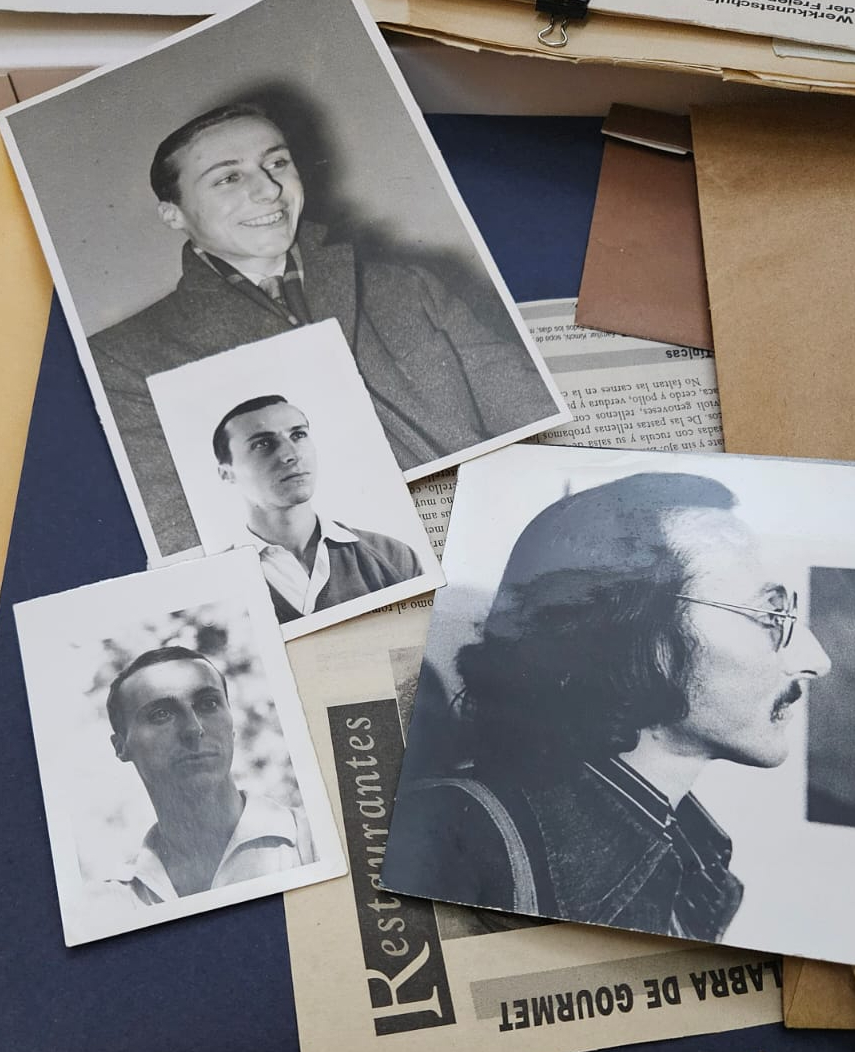
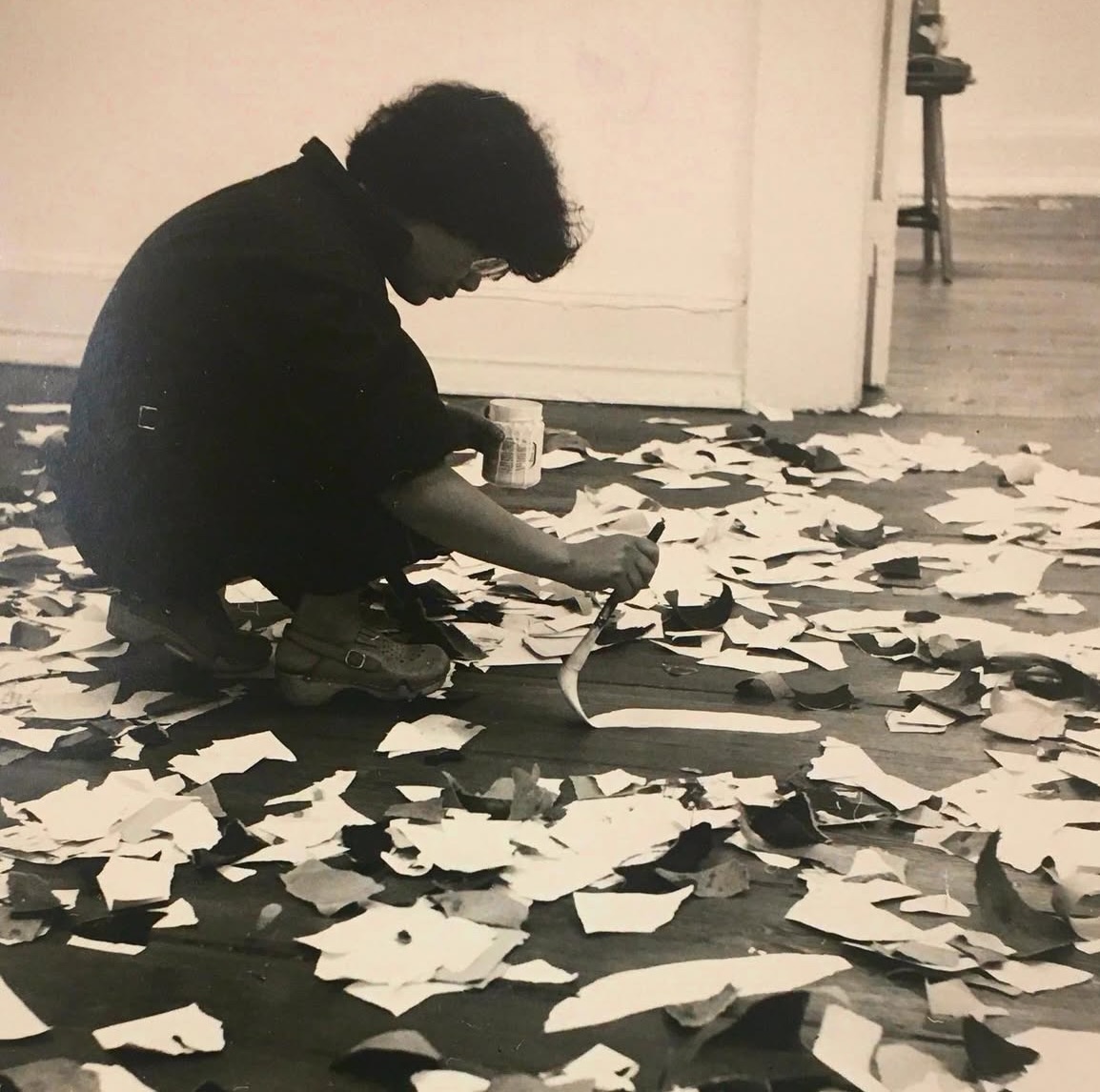
Beate Anspach: What insights into the history of the HFBK or international art networks have emerged from your research so far?
Nicholas Mboya: Personally, I intrigued by why 50 alumni from African countries came to study art at HFBK between the 1960s and 1970s, particularly in the context of the Airlift Program to the USA from the late 1950s to the mid-1960s. This interest is heightened by the fact that many African countries were gaining independence during that decade. Those fortunate enough to study abroad typically pursued “white-collar” careers, focusing on areas such as law, finance management, medicine and healthcare, as well as agricultural and engineering studies. The motivation behind this was to escape the minimal job opportunities that had predominantly been available to Africans during the colonial era. Additionally, there was a desire to contribute to nation-building in their countries just ahead of independence from colonial rule. While my insight remains unproven due to a lack of digital footprints or archival materials, I believe there is a strong possibility that the African students at HFBK were part of a larger wave of students (Flüchtlingsstudenten) migrating to East Germany and eventually West Germany from the Soviet bloc between the 1950s and 1990s. They may have been fleeing racial discrimination, only to find themselves in another exclusive system of marginalization. My understanding is that many of the African alumni chose to study art as a response to the brain drain created by an education system that disregarded their potential. Moreover, these students were determined not to return home without a degree, as doing so would bring shame and embarrassment for having come back empty-handed.
Beate Anspach: What challenges arise when researching the biographies of international alumni?
Nicholas Mboya: The next step in our research primarily focuses on online resources. This means that having access to digital records is very important, but it can be difficult if those records are missing. Additionally, communication among some of the living former students has been slow. Although the exact reasons are unclear, it’s likely due to health issues.
Astrid Mania: Most of our research is remote. As Nicholas said, when there are no digital traces – and this is the case with many of our international alumni – we would basically have to go and do research on site.
Beate Anspach: The project also addresses economic and social factors, such as why artists were unable to continue their practice. Why is this aspect important?
Nicholas Mboya: I believe that economics plays a crucial role in many aspects of life, and this is especially true in my research. I found that some families had to sell their land or take on debts to support their education. Many students also raised money through fundraising events, tea parties, and community gatherings called Harambee, which means “let’s pull together.” These events were often organized by local politicians and union leaders. For those who didn’t complete their studies, the challenges weren’t just financial. They also faced social issues like language barriers and discrimination, making it harder for them to find jobs and support themselves, which sometimes led to dropping out of school. This raises important questions about who gets the opportunity to study and what backgrounds they come from. It also highlights the significant need for programs that subsidize school fees and provide scholarships to help students succeed.
Astrid Mania: In addition to what Nicholas already said, even though the German educational system is a lot more inclusive than that of other countries with, in some cases, unsurmountable student fees, the economic background is crucial whether a young person can or feels entitled to study. And even if someone does study art, this is, as we all know, not necessarily the gateway to economic stability. Many alumni may not have been able to pursue an artistic career after university or academy. What became of them? This is not a popular topic, but I feel should be addressed. Especially for the sake of those who find themselves in a similar position. And therefore, it is important to look at the very diverse biographies and learn about the different paths our alumni have taken some of which I addressed above.
Beate Anspach: How do you envision the archive developing in the future?
Nicholas Mboya: I envision the archive as a valuable resource for other scholars and researchers who share similar interests. It’s already serving this purpose. I also see the database expanding to attract more international students who are curious about HFBK’s history. My hope is that this will inspire them to get involved and help keep the archive thriving and active.
Astrid Mania: Beyond that, as far as the actual website is concerned, ideally, in the future, there will also be a section with some nice graphs to visualize statistics. We have got so many data we can analyze and interrogate, if you like. To answer some of the questions we have raised here. And I am of course hoping that the essays and biographies sections will continue to grow. Especially the former is a place for today’s international students to also write about what they experience. Alienation, racism, being lost in translation, these are topics that are relevant today, and that certainly were so several decades ago. And then there are the happier aspects, learning, making friends, adventures. I love the story by our alumna Alice Schwartz who very fondly recalled her time at HFBK in the 1950s, riding around Western Europe on a motorcycle with her classmates.
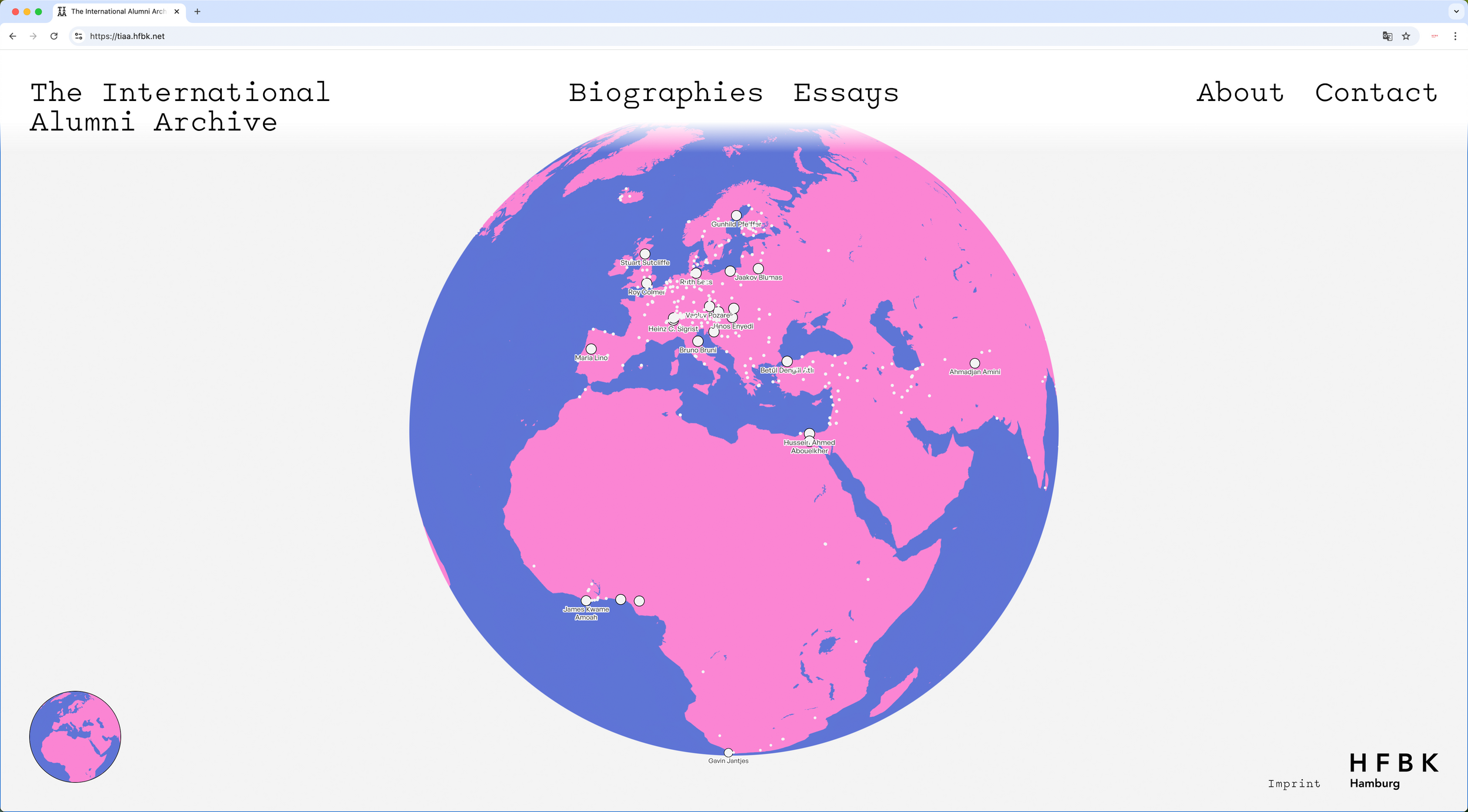
Screenshot from the Website https://tiaa.hfbk.net/