This website uses cookies to display external content and to collect anonymous statistics on usage behavior.
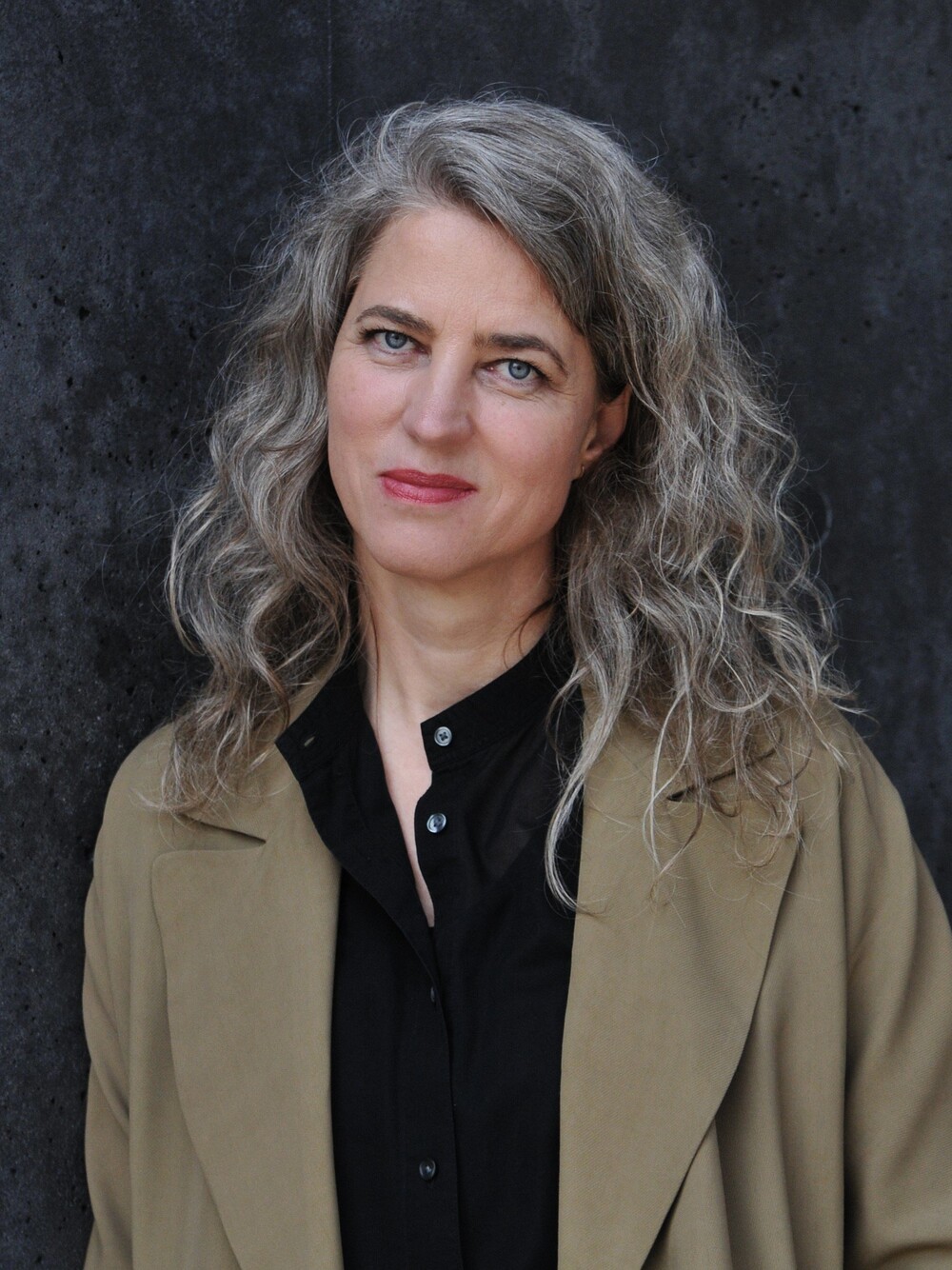
Juliane Rebentisch is being supported by the prestigious Opus Magnum funding program of the Volkswagen Foundation for a publication project in the field of an “aesthetics of the Anthropocene.” According to the foundation, the program is intended to “give professors in the humanities and social sciences who have distinguished themselves through outstanding work the freedom to devote themselves intensively to the writing of a major scholarly work—an opus magnum with an impact extending beyond their own academic community.” The funding includes financing a substitute professorship for a period of up to 18 months. From April 1, 2026, to September 30, 2027, Juliane Rebentisch will be represented by Eva von Redecker.
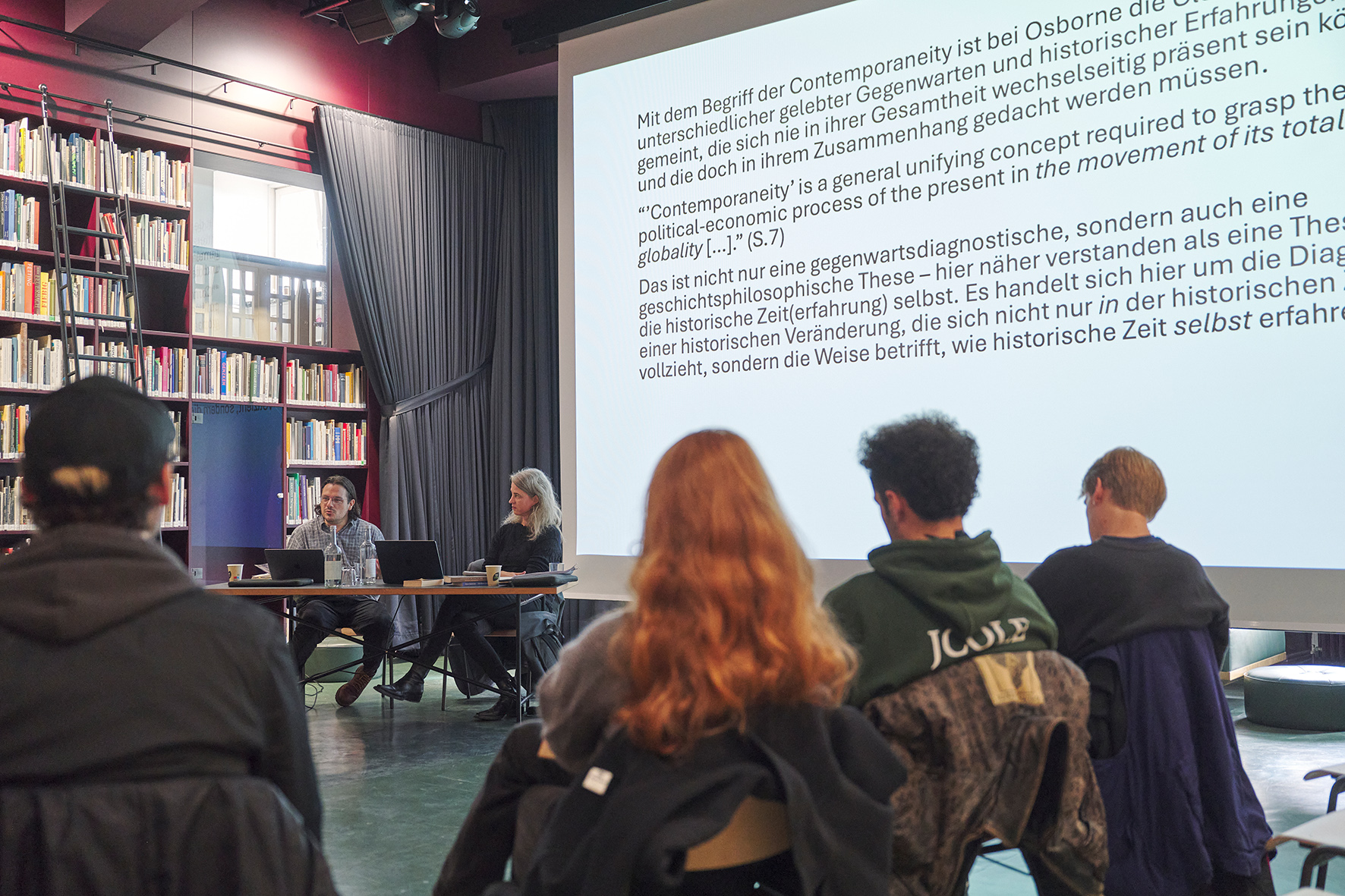
Juliane Rebentisch’s colloquium takes place once per semester in a block format. Please refer to the course catalog for specific dates.
Juliane Rebentisch studied Philosophy and German Studies at the Free University of Berlin, completed her doctorate at the University of Potsdam in 2002 and her habilitation at the Goethe University in Frankfurt am Main in 2010. From 2015–2018 she was President of the German Society for Aesthetics. From October 2011 to September 2024, she was Professor of Philosophy and Aesthetics at the Hochschule für Gestaltung in Offenbach; from 2014 to 2024, she was a member of the faculty at the Frankfurt Institute for Social Research, where she is now a Permanent Fellow. Since 2019, she has also been a Regular Visiting Professor at the German Department at Princeton University. In 2017, she was awarded the Lessing Prize of the Free and Hanseatic City of Hamburg. She took up her professorship at the HFBK Hamburg in October 2024.
Juliane Rebentisch is the author of, among others, Ästhetik der Installation, Die Kunst der Freiheit, Theorien der Gegenwartskunst zur Einführung and Der Streit um Pluralität. The thematic spectrum of her other publications ranges from the varieties of negativity to the problem of progress in contemporary art, from freedom in contemporary capitalism to the paradoxes of political equality, from the philosophy of language to the epistemology of irrationality, from the question of the (anti-)discipline of aesthetics to the history of queer subcultures.
In her research and teaching, she is particularly interested in the intersections between aesthetics, ethics and political philosophy.
„The Reality of Ghosts: Haunted Landscapes of the Anthropocene“, in: October 196 (Spring 2026), S. 3–17.
„Lutz Bacher: Variations on Her Riddles“, in: Lutz Bacher, Burning the Days: An Exhibition, hg. Helena Kritis, Solveig Øvstebø, Astrup Fearnley Museet, Oslo/WIELS, Brüssel, Amsterdam: Roma Publications 2026, S. 142–153.
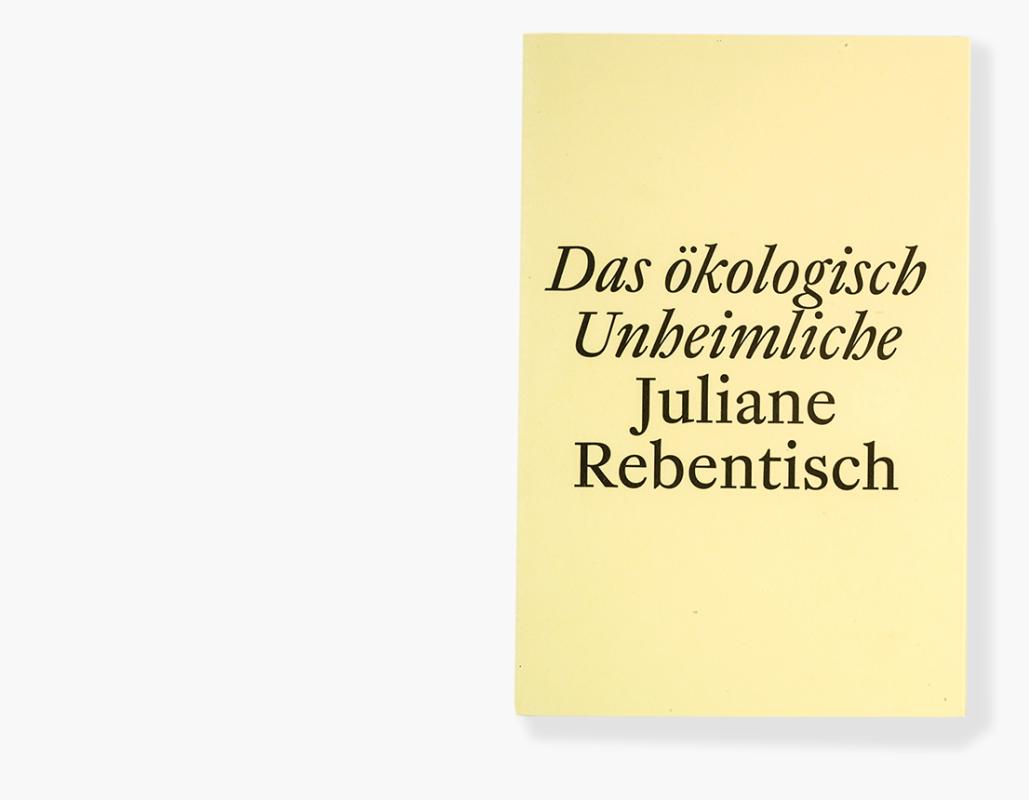
Das ökologisch Unheimliche/The Ecological Uncanny,Materialverlag der HFBK Hamburg, 2025