This website uses cookies to display external content and to collect anonymous statistics on usage behavior.
POSITION.
Thursday 24 Sep 2026
Eröffnung
6:00 pm
Karla Krey
Ausstellung und Workshop am 2.10., 19 Uhr und 3.10., 13 Uhr
Um Anmeldung wird gebeten: artworld@noroomgallery.com
6:00 pm
Stanton Cornish-Ward, Trent Crawford a.o.
Robert Bramkamp, Thomas Demand, Bogomir Ecker, Pia Stadtbäumer a.o.
3:00 pm
Dongchan Kim
11:00 am
Im Rahmen des we present festival
Regie, visuelle Gestaltung, Bühne: Hannah Nuñez Arnim
Im Rahmen des we present festival
8:00 pm
Omid Arabbay, Anastasiia Batishcheva, Bjørg Elttør, Jonas Fischer, Hannah Francke, Tatjana Hub, Krina Königsmann, Maximilian Koppernock, Ann-Sophie Krüger, Zoe Popp, Igor Vrdoljak, Mimi Shudi Yan
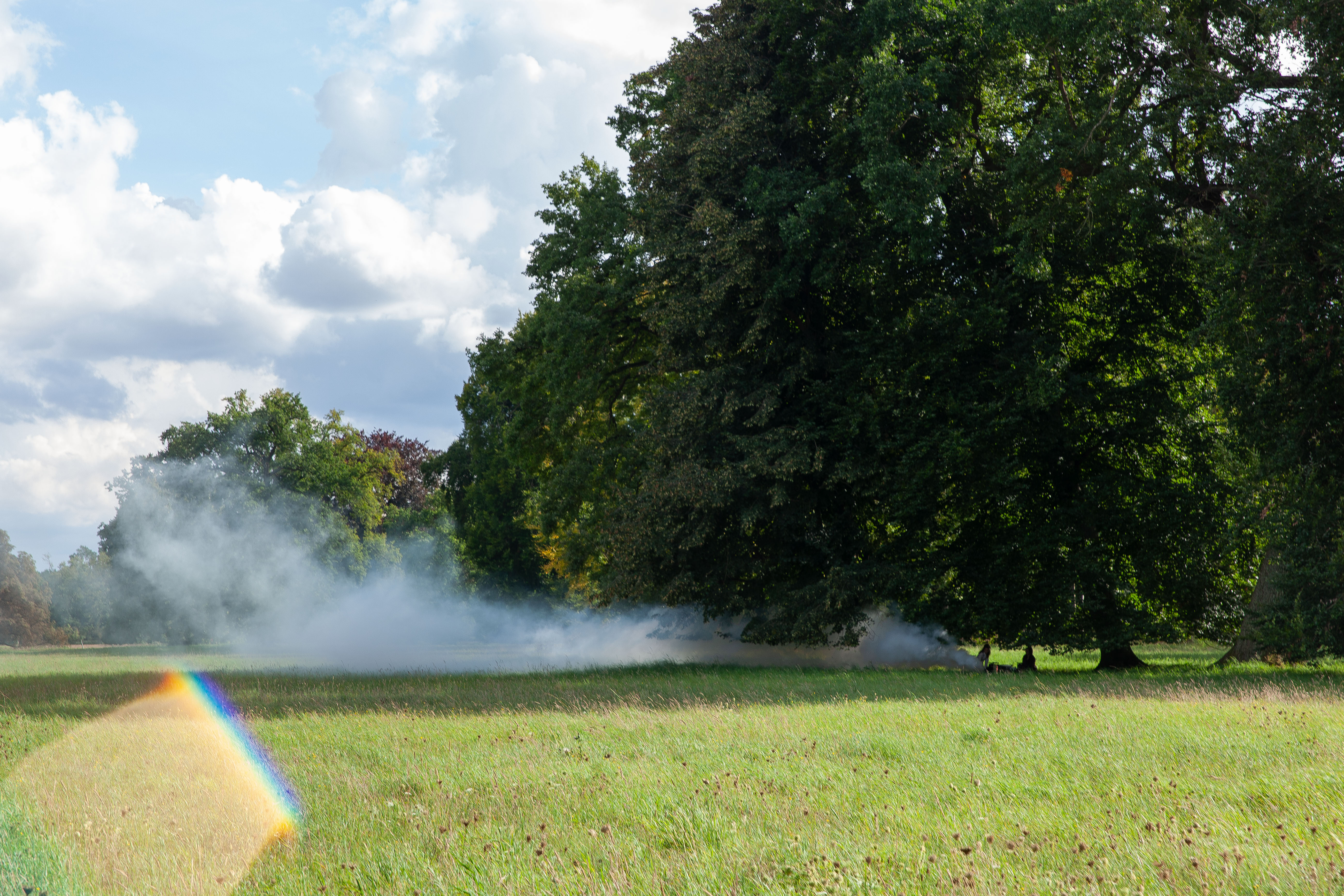
Climate change is one of the most urgent and existential crises of our times. It is no longer a dystopian vision of the future but a very present phenomenon. In actual fact, more than just the temperature is undergoing a change – the political and social climate is also changing noticeably, in Germany and also internationally.
Can art, which often recognises seismographic changes, make change visible? In the summer of 2024, students from HFBK Hamburg, the Academy of Fine Arts Leipzig and the Academy of Fine Arts Munich came together in Neuhardenberg to explore the opportunities for art in times of climate change during a photography summer workshop. The accompanying exhibition was held at Neuhardenberg Castle in the summer of 2025.
Can forests be archived before they are destroyed? How is the soil condition related to climate change? How do we deal with invasive species? What is alien to us? What is familiar? The students addressed these and other questions for an entire year. In the exhibition at the ICAT at the HFBK Hamburg, which features works that have been partially updated, they attempt to find answers by artistic means.
under the supervision of Prof. Armin Linke, Prof. Heidi Specker, Prof. Tobias Zielony and Prof. Thomas Weski
Opening times: Daily from 2 to 6 pm, except Mondays
Special opening times during Hamburg Art Week: 4–6 September 2026, 11 am–8 pm
6:00 pm
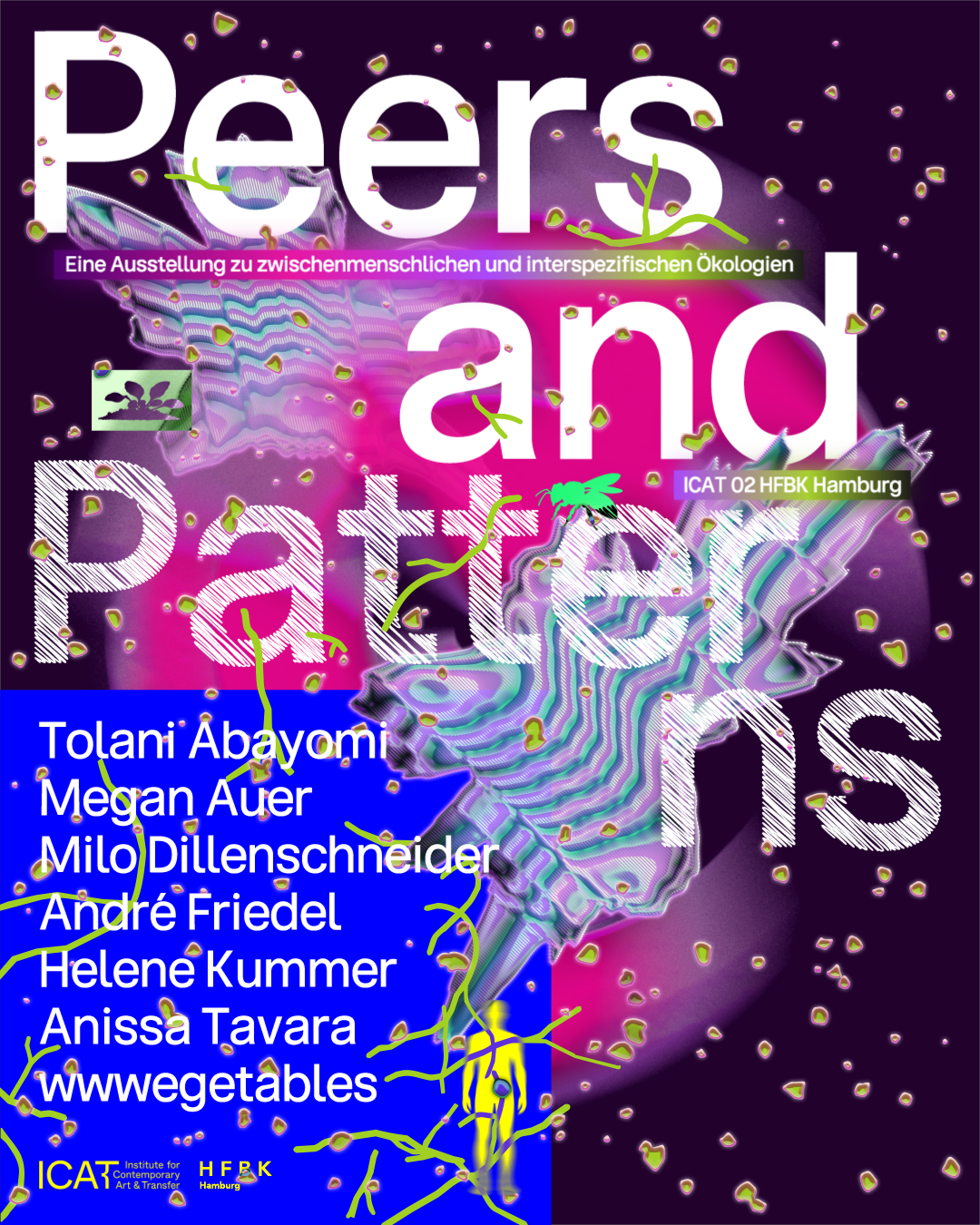
Tolani Abayomi, Megan Auer, Milo Dillenschneider, André Carsten Friedel, Helene Kummer, Anissa Tavara, wwwegetables (Morgan Mansour & Veronika Pluzhnikova)
An exhibition on interpersonal and interspecific ecologies
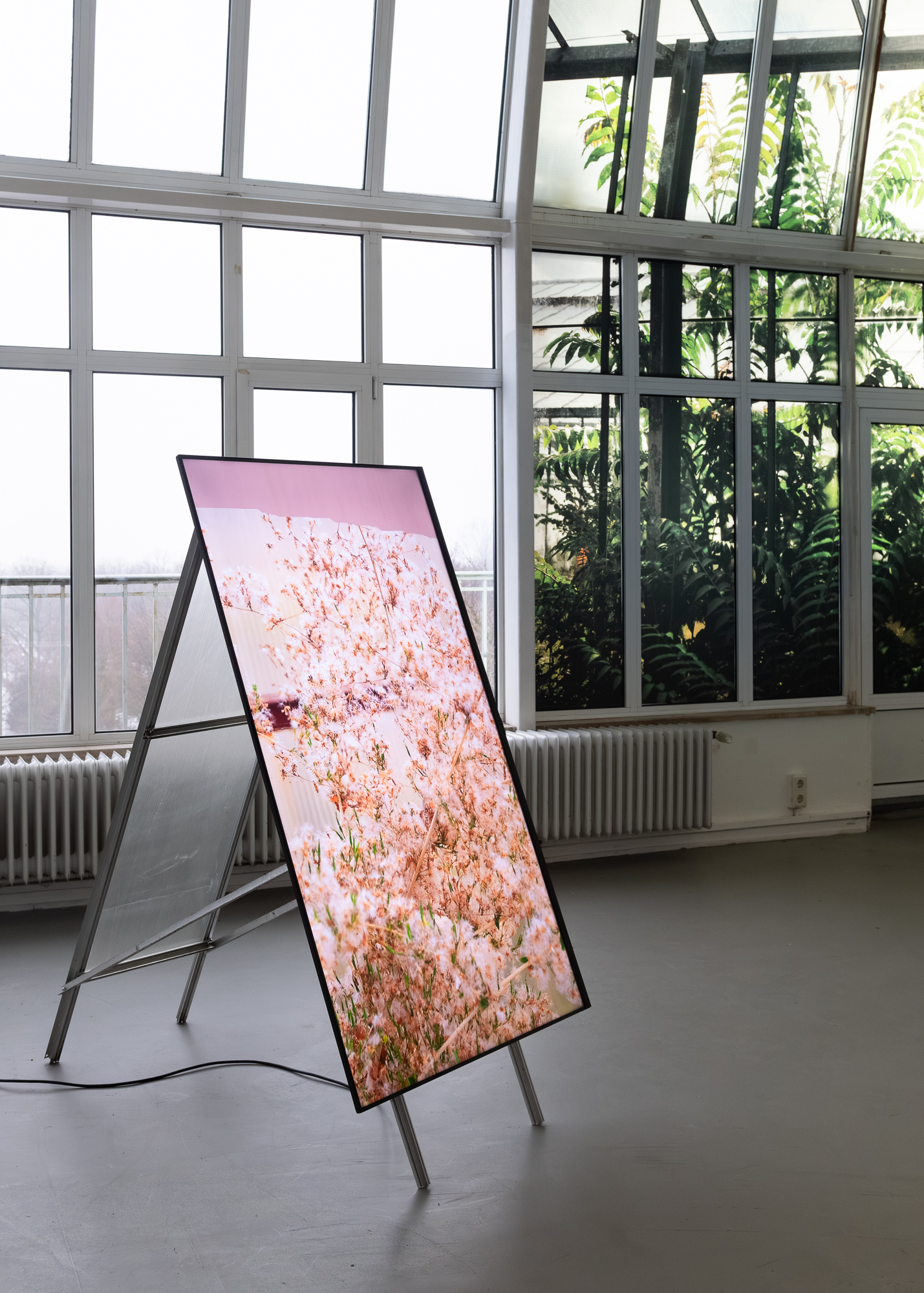
Ecosystems typically describe the interaction between organisms and their environment. The dynamics of these relationships are in a state of constant flux, repetition, and negotiation. The relationship between humans and nature has long served as a motif for artistic exploration and is continually being redefined. The exhibition at ICAT aims to explore both interspecies and interpersonal relationships and to present ecosystems as symbols of interconnected networks of coexistence. Botanical imagery and human-animal constellations, in particular, prove to be rich metaphors for encounters, kinships, and collaborations. Likewise, all other forms of living beings (or “creatures,” cf. Haraway) are part of these relationships and structures.
The science theorist Donna Haraway explores the coexistence of species in depth and writes: “Creatures—human and nonhuman—become one with one another, composing and decomposing one another, across all scales and registers of temporality and materiality; in sympoietic entanglements, in ecological, evolutionary, and developmental earthly secularizations and desecularizations.”
Seven students at the HFBK Hamburg are exploring different areas within the branching network of interpersonal and interspecific ecologies and are finding various aesthetic expressions in the form of installation, sculpture, culinary art, graphic design, and film. The exhibition space adapts the idea of a system that is constantly in motion and changing, and, through the use of magenta-colored light, evokes the atmosphere of a greenhouse.
Curated by Anne Meerpohl
Opening times: Daily from 2 to 6 pm, except Mondays
Special opening times during Hamburg Art Week: 4–6 September 2026, 11 am–8 pm
6:00 pm
Performance by Milo Dillenschneider
Anik Lazar
Sound Performance
19th + 20th September, 5–8 P.M.
5:00 pm
Helena Wittmann, Anna Lena Grau, Vanessa Gravenor, Eda Aslan, Dörte Habighorst & Sophia Leitenmayer a.o.
7:00 pm
Vanessa Gravenor, Dörte Habighorst & Sophia Leitenmayer a.o.
Anna Lena Grau, Helena Wittmann, Eda Aslan, Vanessa Gravenor, Dörte Habighorst & Sophia Leitenmayer a.o.
Jasmin Werner
7:00 pm
Jenny Schäfer
7:00 pm
Gesa Troch
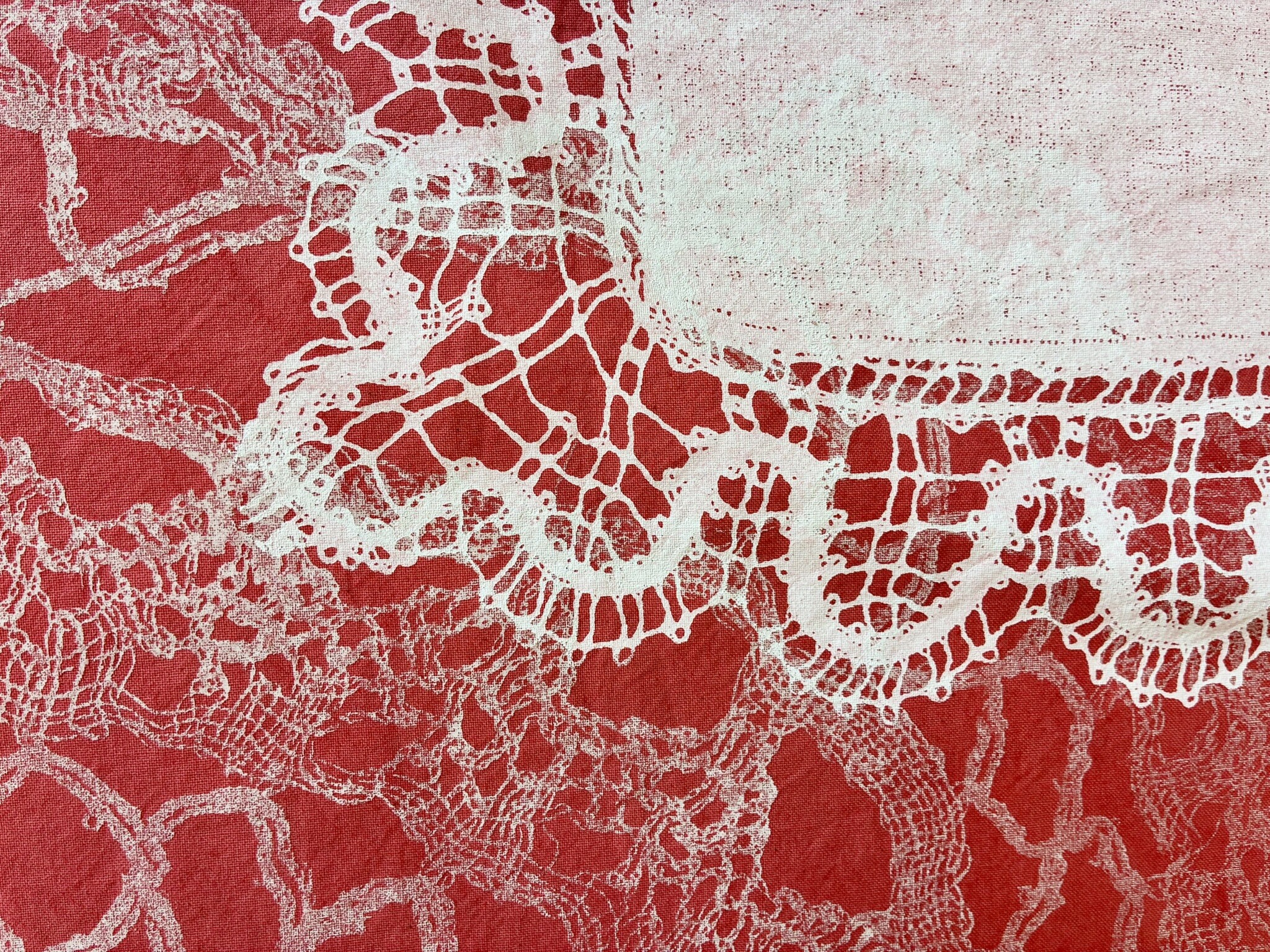
Porous Container is a site-specific installation that negotiates craft and mass production, individuality and universality, intimacy and conformity. Two works confront one another through their layered connotations and distinct modes of expression—ceramic and textile.
In contrast to the coolness of household appliances and consumer electronics on the ground floor of MediaMarkt, the textile evokes the organic, the warm, and the soft. The associations woven into fabric and cloth are manifold, extending from the domestic and the private to forms of labour historically coded as feminine, as well as to notions of connectedness, resilience, coverings, and skins. The denser a fabric, the more opaque and resistant it becomes. Lace, by contrast, is deliberately perforated, its openings serving both decorative and artistic purposes. In her installation, Gesa Troch brings together dyed, densely woven fabrics and prints of delicate, perforated lace collected from members of her family. Although these two manifestations of textile appear almost contradictory in function despite sharing the same material basis, they also point to the medium’s ambivalent readings. On the one hand, textile labour has long been devalued through its association with femininity—a devaluation that continues to be reproduced. On the other, it constitutes a highly sophisticated and ancient art and craft tradition worthy of recognition. The material’s ubiquitous presence in the form of clothing also recalls global production chains that often stand in stark contrast to any appreciation of human labour. The industrial manufacture of lace, for instance, bears little resemblance to lacemaking, crocheting, or weaving, and is frequently carried out under precarious conditions for both workers and the environment.
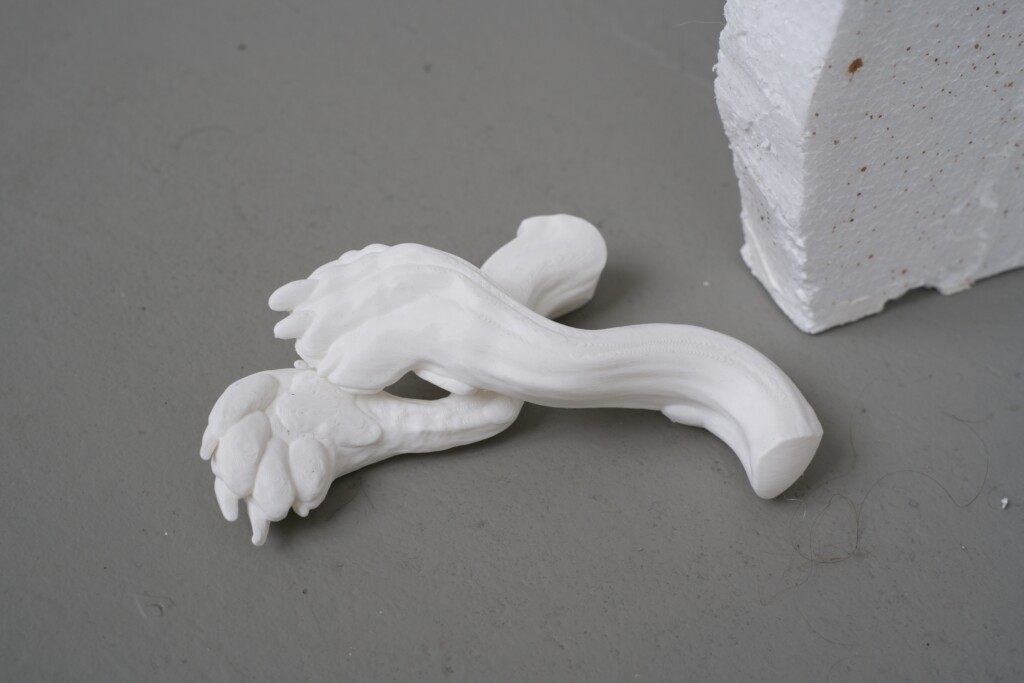
The second component of Porous Container consists of ceramic objects that imitate spent fireworks batteries—the kind commonly found scattered across urban spaces in the first days of the new year. Large quantities of soggy cardboard remnants, dispersed throughout the city.
For some, they embody the celebration of a significant transition: the turn of the year, together with the wishes, hopes, and dreams associated with it. For others, they represent a danger; the loud explosions evoke memories of violence, while wildlife and the environment suffer from the overwhelming noise. In their structure of circular tubes that remain after detonation, they resemble the repetitive ornamentation of woven textiles. Cracker transforms these otherwise softened cardboard objects, encountered in public space after New Year’s Eve, into initially rigid yet ultimately fragile ceramic forms.
Troch’s installation reads as a counterpoint to its loud surroundings, which themselves point to mass production and consumer culture. The now-silent fireworks batteries, together with the references to textile practices and craftsmanship, invite reflection on the contexts and codings of their materialities in relation to their setting at the entrance to Hamburg’s main shopping street. The exhibition title likewise refers to these ambivalent inscriptions of material: a container initially suggests a standardized vessel made of a hard material—robust and interchangeable. Once it becomes porous, however, it begins to lose its original function, becoming permeable and unstable. This porosity becomes the connecting element through which the works communicate with one another.
6:00 pm
Dorothee Diebold
6:00 pm
Anmeldung unbedingt erforderlich: https://app.guestoo.de/public/event/ecb53b92-43f8-4a28-9fcf-b3aef3843a02?lang=de
Kuno Seltmann, Merabi Danelia, Daniel Eckoldt, Emely Mair
We will open our exhibition container on Thursday, August 28th at 5 pm in the backyard of the University of Fine Arts Hamburg, celebrating 40 years of friendship between Hamburg and Shanghai.
The week after, our project will start its journey to China and can be seen again in Shanghai in November at the Future Lab.
Leyla Yenirce
6:30 pm
Annette Kelm, Lene Markusen, Mark Morris a.o.
5:00 pm
Johanna Amelsberg, Joy Barczak, Nele Bolbrinker, Carina Brausendorf, Merrit Claußen, Paula Cukrowski, Vincent Gramss, Lavinia Gueye, Jan Hanna, Lea Hasenkamp, Jonathan Heinemann, Eva Hentschel, Jingxi Hu, Abbas Khaled, Johanna Klecker, Judith Kobusch, Lola Molina Sauerteig, Clara Palmberger-Süße, Elisa Pontow, Isabel Primavesi, Louise Vind Nielsen, Maja Vanneste, Hannah Wobst, Rojda Yildiz, Lina Zabel, Nora Sternfeld
Ein öffentliches Programm von Studierenden der HFBK Hamburg in der Ausstellung FIRE der Stadtkuratorin Hamburg von 10–13 Uhr und 15–18 Uhr
Was wären öffentliche Räume für das, was nie wieder gut werden kann? Das Vermittlungsprogramm widmet sich der Ausstellung FIRE der Stadtkuratorin Hamburg am Mahnmal Sankt Nikolai. Dabei begegnen wir dem Schmerz und den brennenden Fragen in Geschichte und Gegenwart, die ihre künstlerischen Arbeiten aufwerfen.
Ein Vermittlungsprogramm von Johanna Amelsberg, Joy Barczak, Nele Bolbrinker, Carina Brausendorf, Merrit Claußen, Paula Cukrowski, Vincent Gramss, Lavinia Gueye, Jan Hanna, Lea Hasenkamp, Jonathan Heinemann, Eva Hentschel, Jingxi Hu, Abbas Khaled, Johanna Klecker, Judith Kobusch, Lola Molina Sauerteig, Clara Palmberger-Süße, Elisa Pontow, Isabel Primavesi, Louise Vind Nielsen, Maja Vanneste, Hannah Wobst, Rojda Yildiz, Lina Zabel
mit Hendrik Stille
Im Rahmen des Seminars “Museum der Untröstlichkeit” von Nora Sternfeld an der HFBK Hamburg
Zu den künstlerischen Arbeiten der Ausstellung FIRE von Hala Alnaji, Saodat Ismailova, Nikita Kadan, Hamedine Kane, Annette Kelm, Lene Markusen, Mark Morris, Neda Saeedi, Mikołaj Sobczak, Cecilia Vicuña & Coco Bergholm.
Kuratiert von Joanna Warsza, Stadtkuratorin Hamburg
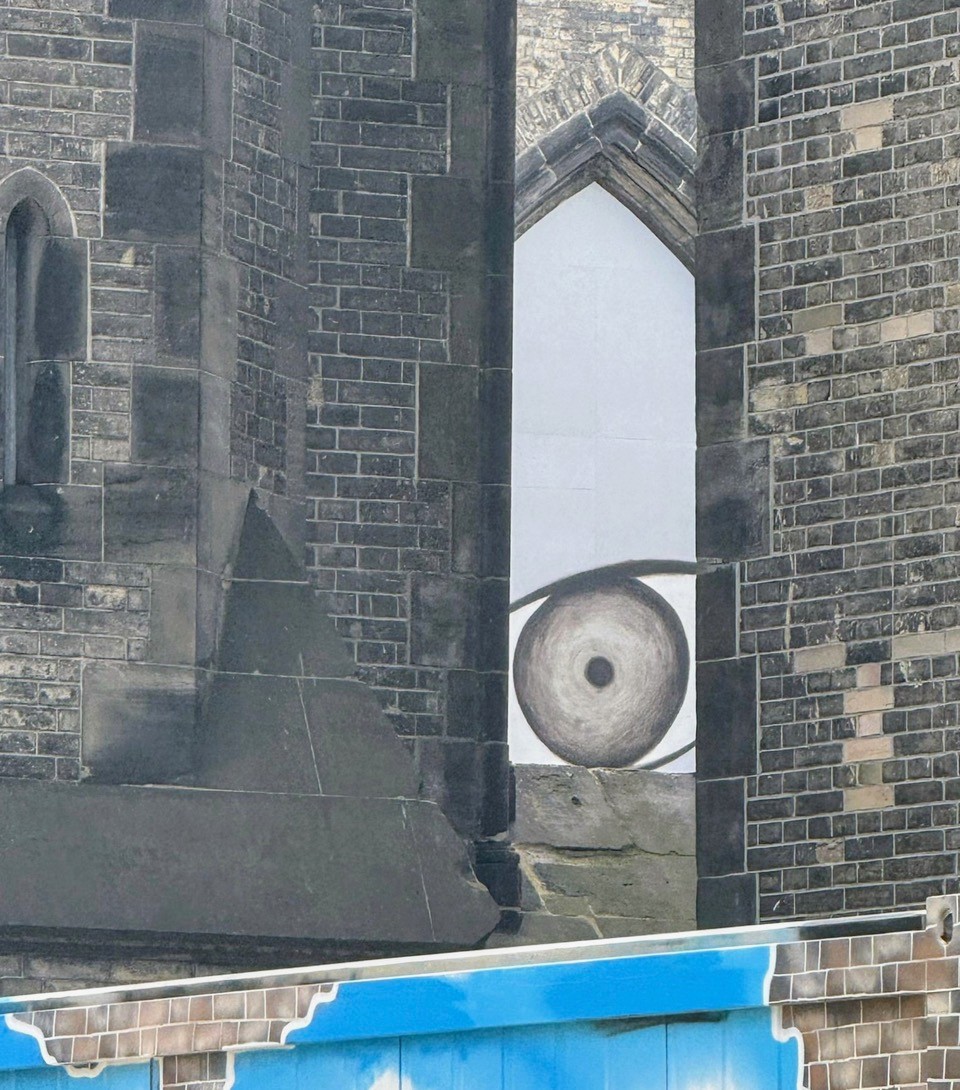
In einem dialogischen Rundgang durch die Ausstellungen FIRE. From the Cosmos to the Commons gibt Natalya Stupka Einblicke in die Thematik der Ausstellungen und stellt die künstlerischen Positionen vor.
Im Anschluss präsentiert der Künstler Mark Morris sein Werk The Chain Reaction.
Die ortsspezifische Skulptur knüpft an die Präsenz Alfred Nobels in Deutschland und an sein Labor in Geesthacht bei Hamburg an, wo ab 1867 die Erfindung und Verbreitung des Dynamits stattfand. Symbolisch macht das Werk die Ambivalenz von Materialien sichtbar, die sowohl unsere Welt erschaffen als auch umgestalten können.
Nele Borchert, Elena Bulycheva, Milo Dillenschneider, Bahar Ensafi, Emmylou Fertschai, Elisa Gonschior, Marlene Kargl Nadiia Mykhailiuk, Julia Quitmann, Merle Richter, Xen Roscher, Bente Steffens, Cathrin Zumhasch
Dariia Kuzmych
Manjari Goteti, Sanna Leone, Genevieve Lotus, Hyunjin Choi, Sarah Lotus