Reading a Wave*: Artistic Research at the Threshold of Water, Embodiment and Infrastructure
Research Professor Jenna Sutela invites applications for PhD in Art Practice candidates within a new interdisciplinary project at the Sculpture Department.
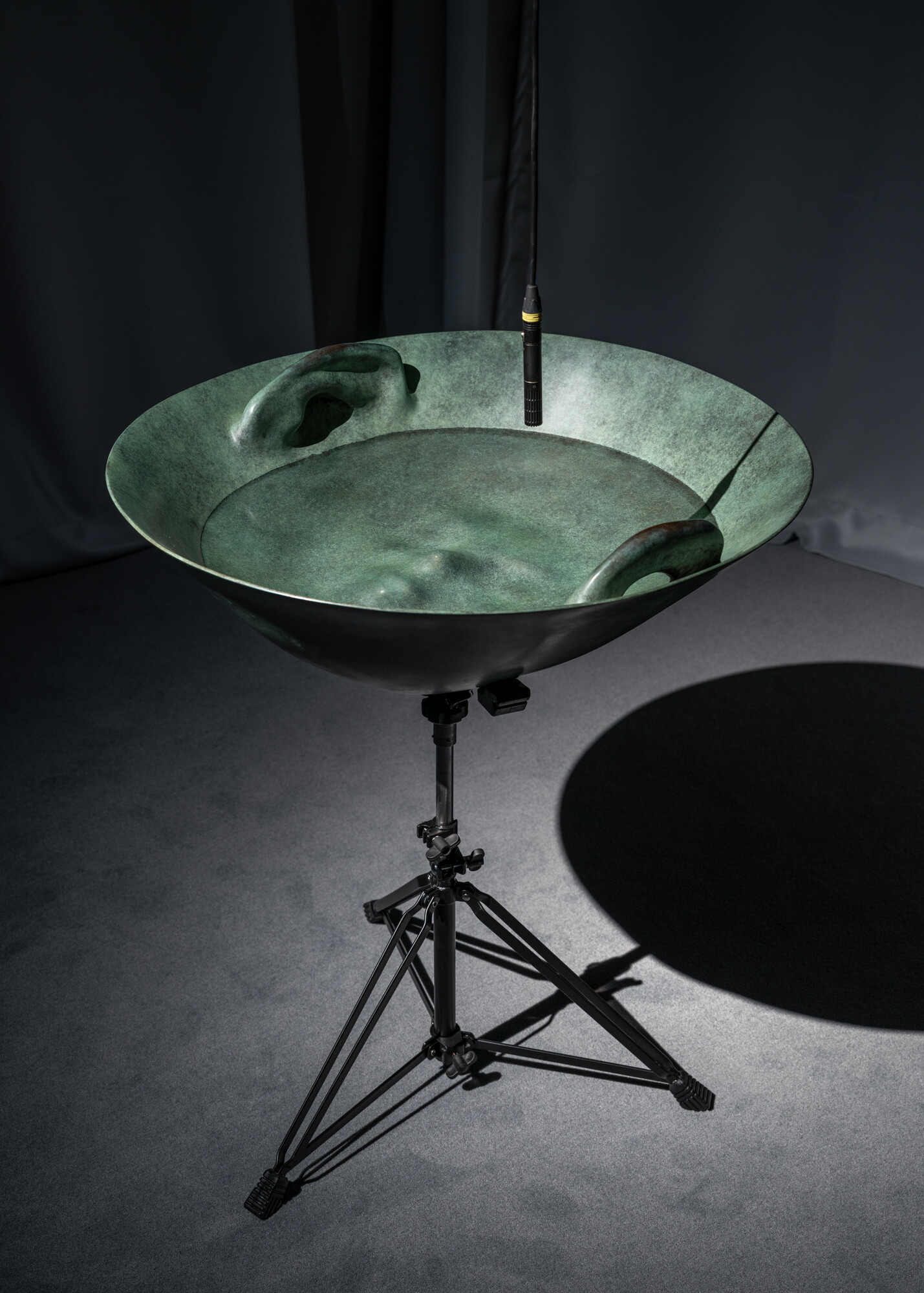
Jenna Sutela, Pond Brain, 2023; photo: David Stjernholm, Copenhagen Contemporary
The project is part of the HFBK Hamburg’s engagement within a Cluster of Excellence BlueMat: Water-Driven Materials, together with the Technical University and the University of Hamburg, pursuing work on water and ecology through a synthesis of artistic and scientific perspectives, contributing a critical reflection on our use of, and relationship with, water and, subsequently, infrastructure in an era of profound planetary crisis. While the partner institutions approach the topic primarily through concepts and techniques from material research in the natural and engineering sciences, as well as the social sciences and philosophy, the art university contributes artistic modes of inquiry, including experimental and aesthetic practices in the fields of sculpture and time-based art, as well as theoretical and speculative discursive approaches and formats.
From an art perspective, the inquiry is first and foremost a conceptual and systemic one: looking not only into water across scales, but reflecting on the role of science and art in society more broadly. Water can be encountered in many different ways within the project. It works as connective tissue that allows movement between, for example, the immense scale of the planetary hydrological system as well as the intimate scale of the fluid body, without treating either as more “real” than the other. We will push the limits of what embodiment can be. Moving through boundaries, water reveals them as thresholds rather than edges, helping us see things not as fixed objects but as sites of continuous exchange – a way of thinking through open and relational systems. We will also trace the “virtual water” hidden in the infrastructures we think and create with. Central to the project is an ecological understanding of existence as fundamentally interconnected with each other, with the tools and built environments we shape, and with a planet that is not our own.
Successfully accepted candidates will find a setting for autonomous, independent inquiry – a space for critical thinking, imagination, and the development of new practice, where the connections between individual artistic research and the wider research cluster are free to take shape organically. Collaborative possibilities include, for example, the chance to experiment with laboratory equipment and materials – hardware, software and wetware alike – and to hold ongoing conversation across disciplines while exercising the kinds of translation skills useful both for situating art practice within an expanded ecosystem and for finding new frameworks for art-making and for existing within the field. Building on the artist researcher’s standing, she/he/they will contribute to the project by participating in public-facing artistic installations and co-shaping the program at large.
*The title takes after “Reading a Wave,” the opening chapter of Italo Calvino’s 1983 novel Mr. Palomar, in which the protagonist tries to isolate a single wave in the sea, only for the task to dissolve under its own complexity.