This website uses cookies to display external content and to collect anonymous statistics on usage behavior.
Exhibition
Of Fragments and Gaps: Students at Lerchenfeld, 1933–1945, between Persecution, Conformity, and Perpetration
HFBK Library
The current opening hours of the library can be found here.
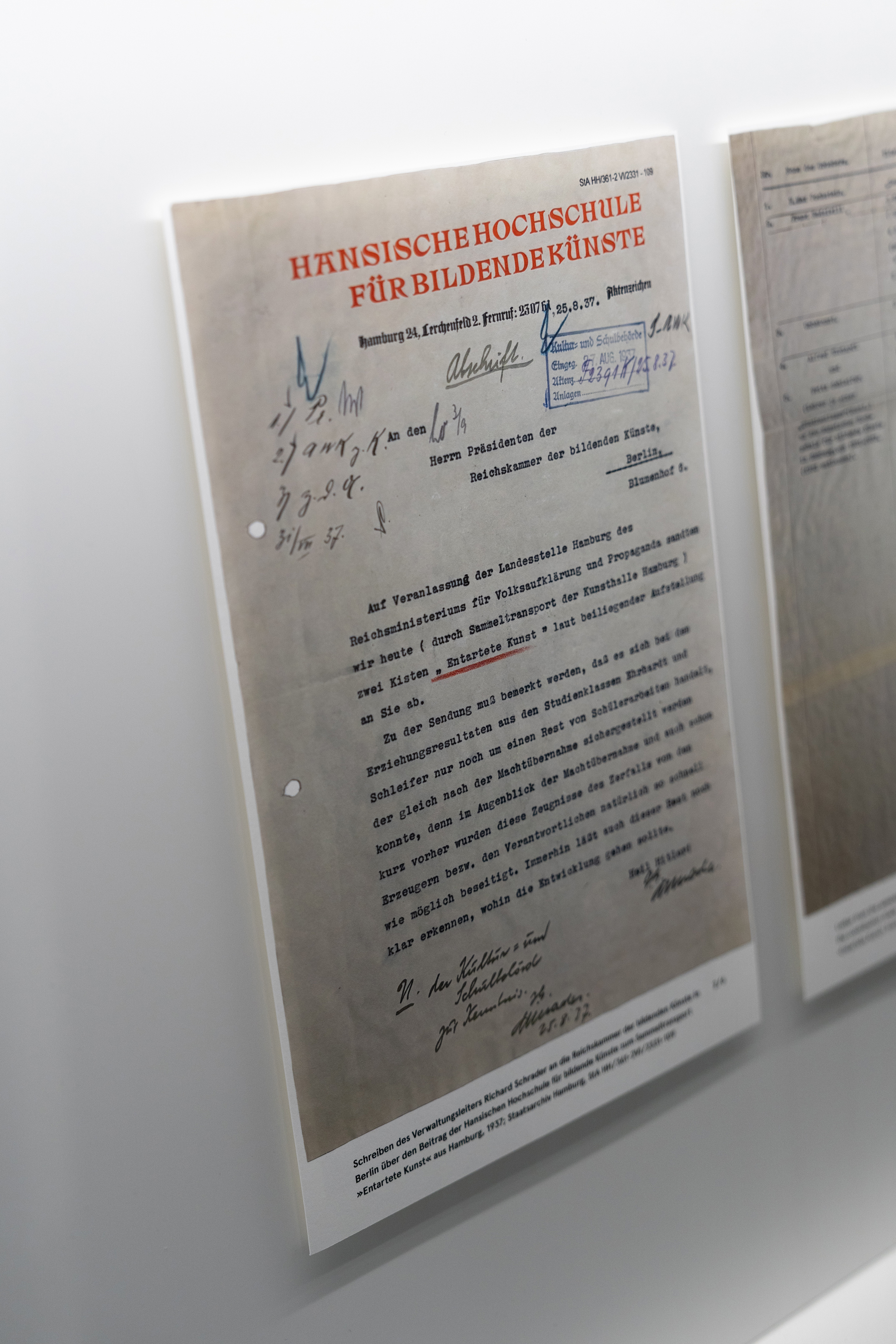
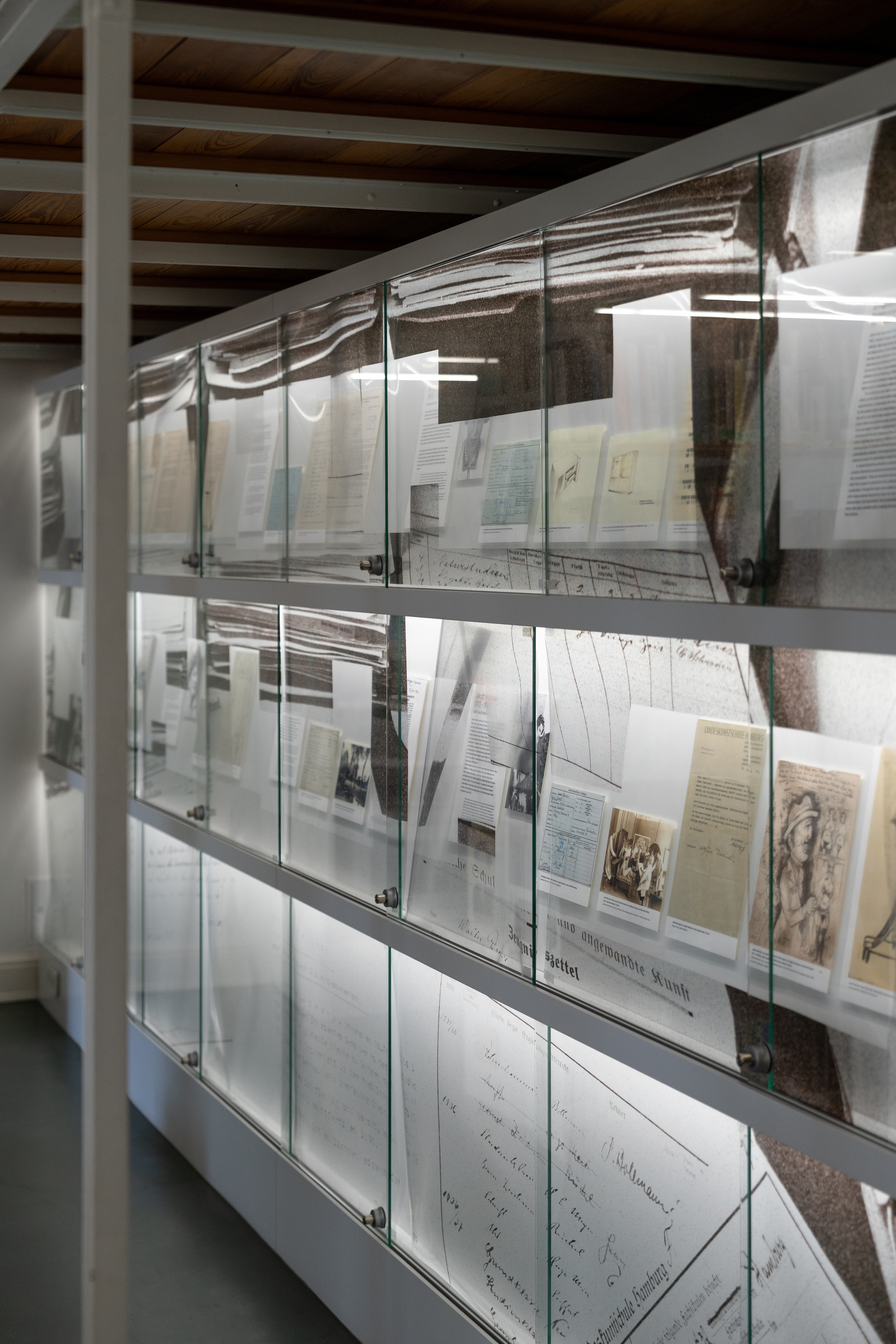
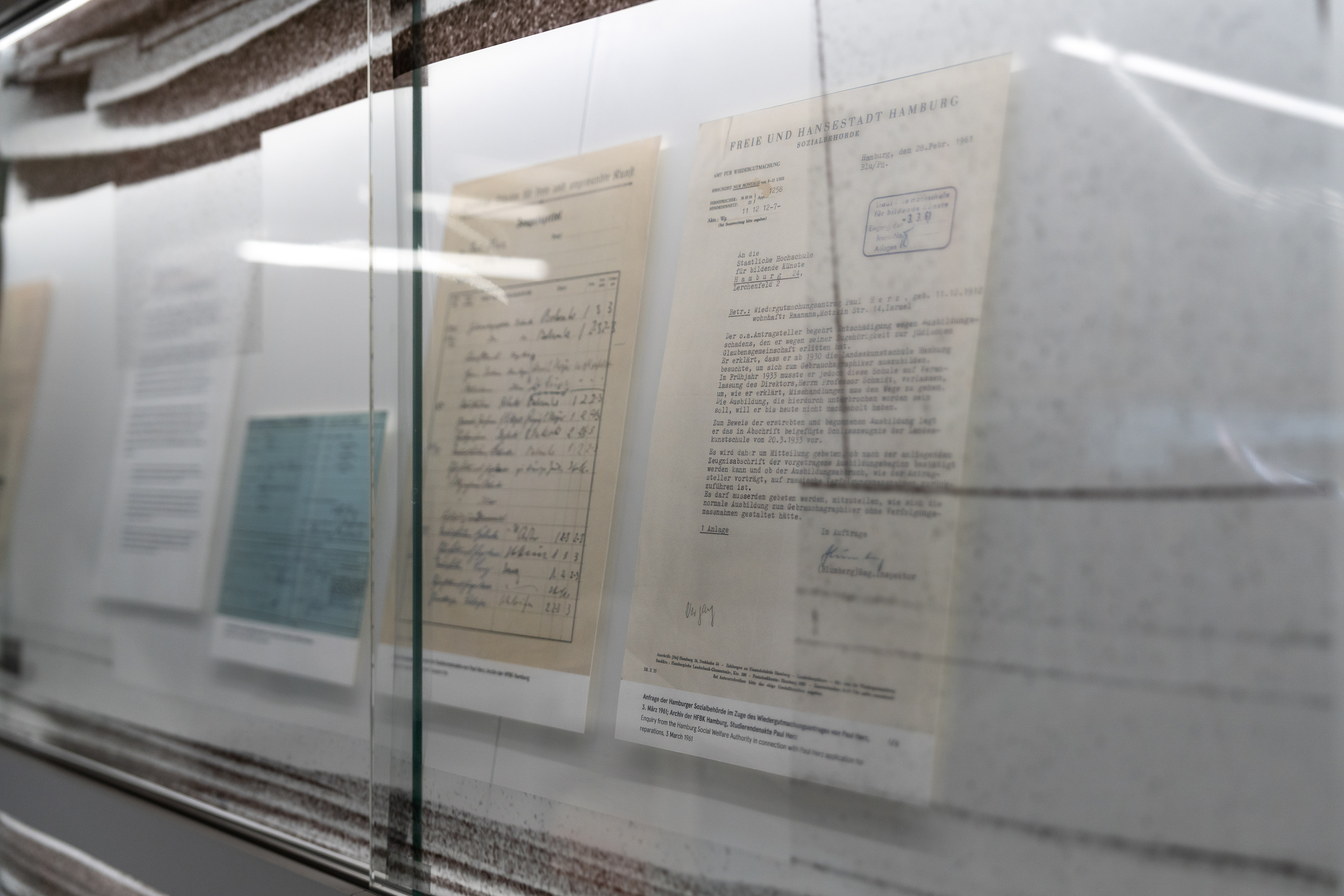
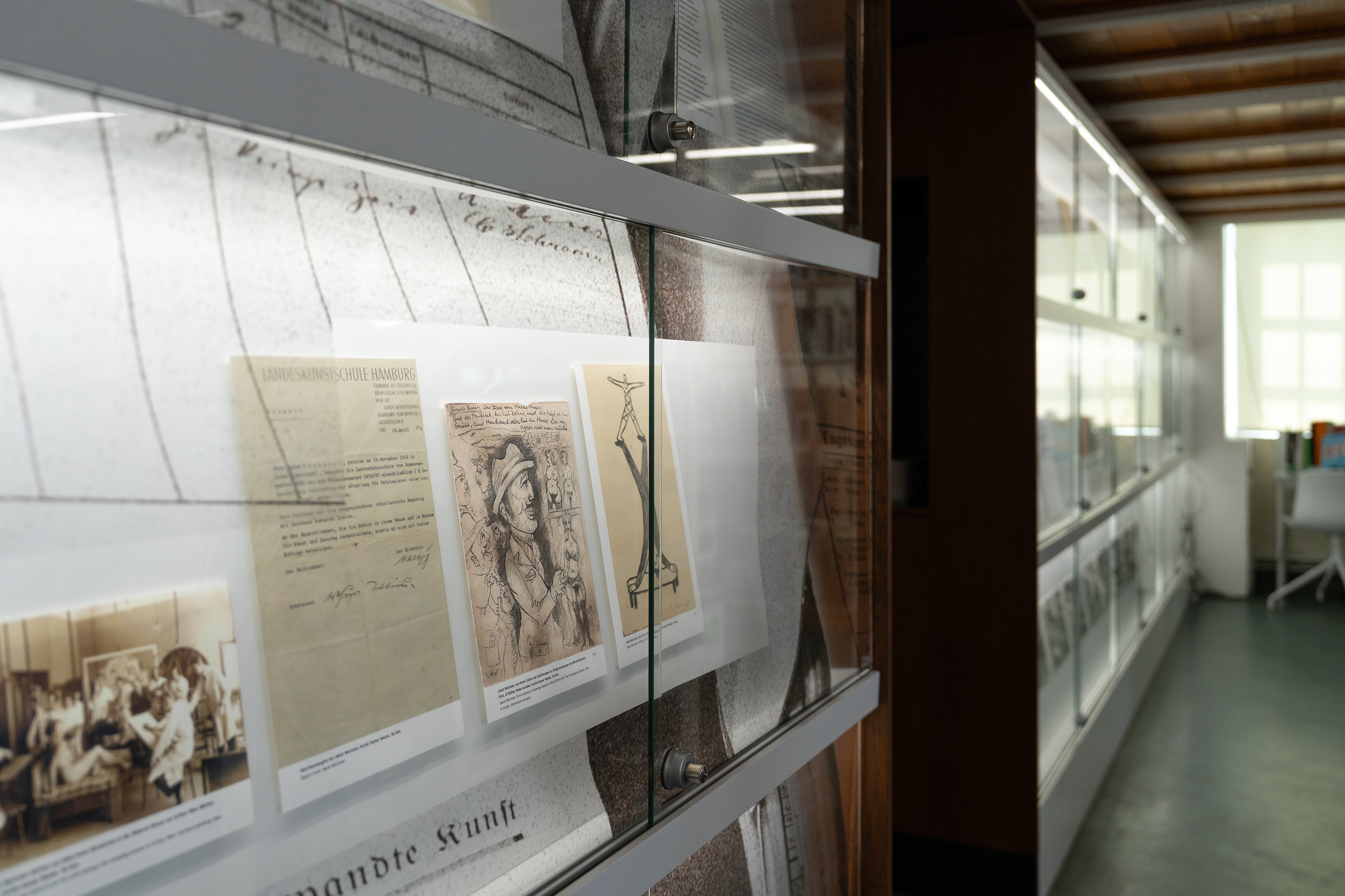
The exhibition of archival materials in the display cases of the HFBK Library opened on 25 June 2026. It accompanies the launch of Dr Alina Just’s newly published study Gestaltung und Gleichschritt. Die Geschichte der Hochschule für bildende Künste Hamburg im Nationalsozialismus (Forum Zeitgeschichte, Band 34, Metropol Verlag, Berlin, 2026) and offers a glimpse into the holdings of the university archives. With its focus on students, the exhibition aims both to emphasize this perspective and to highlight open research questions.
To demonstrate the potential of addressing this research gap, individual students affected by exclusion and persecution are presented as examples within this presentation. These are discoveries that have emerged unsystematically from research conducted in the university archive, primarily by external researchers. The reason for this lies in the historically evolved structure of the HFBK university archive: the student files are sorted in purely alphabetical order from 1905 to 1945—an extensive body of source material that has, in its entirety, remained completely unexplored to this day.
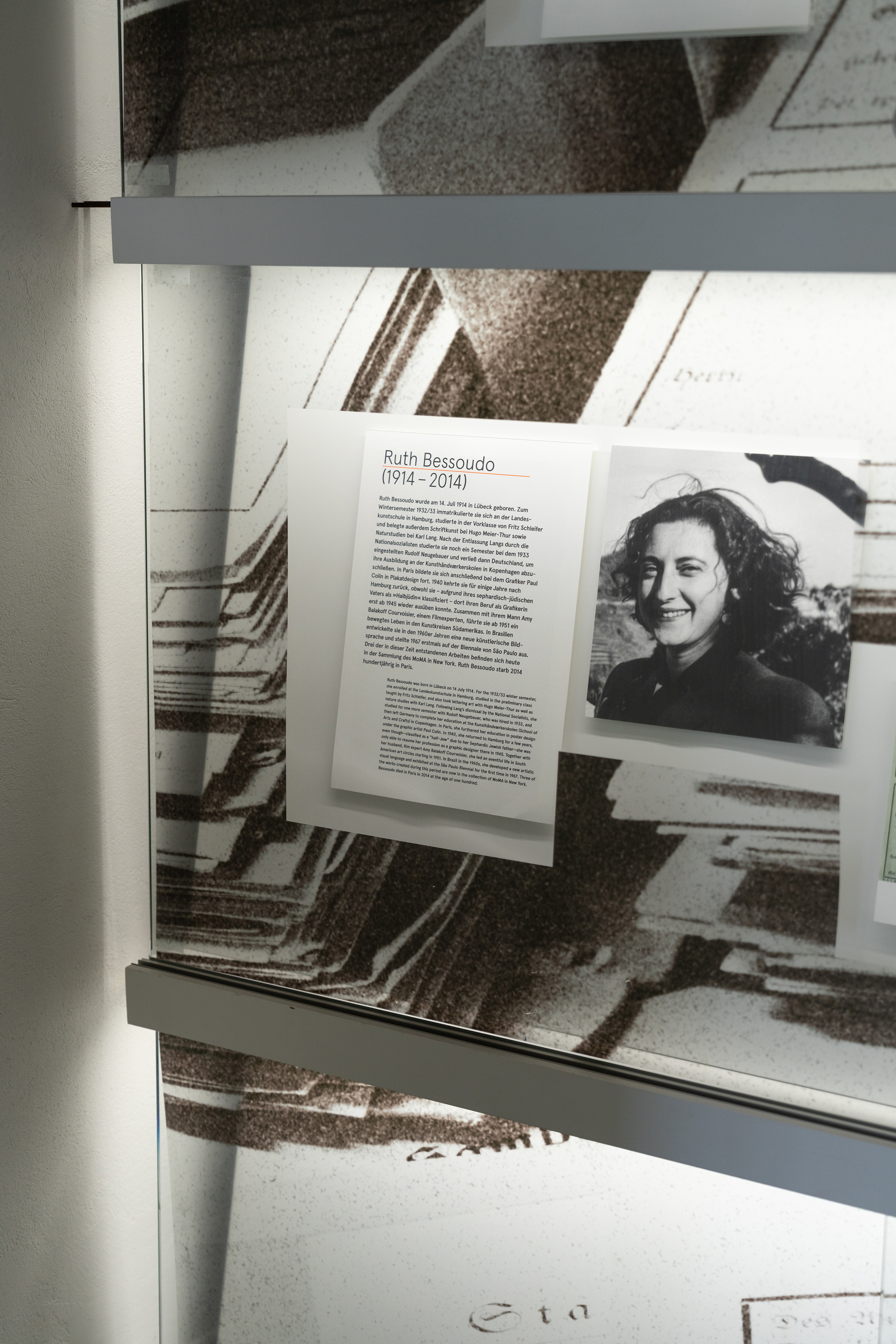
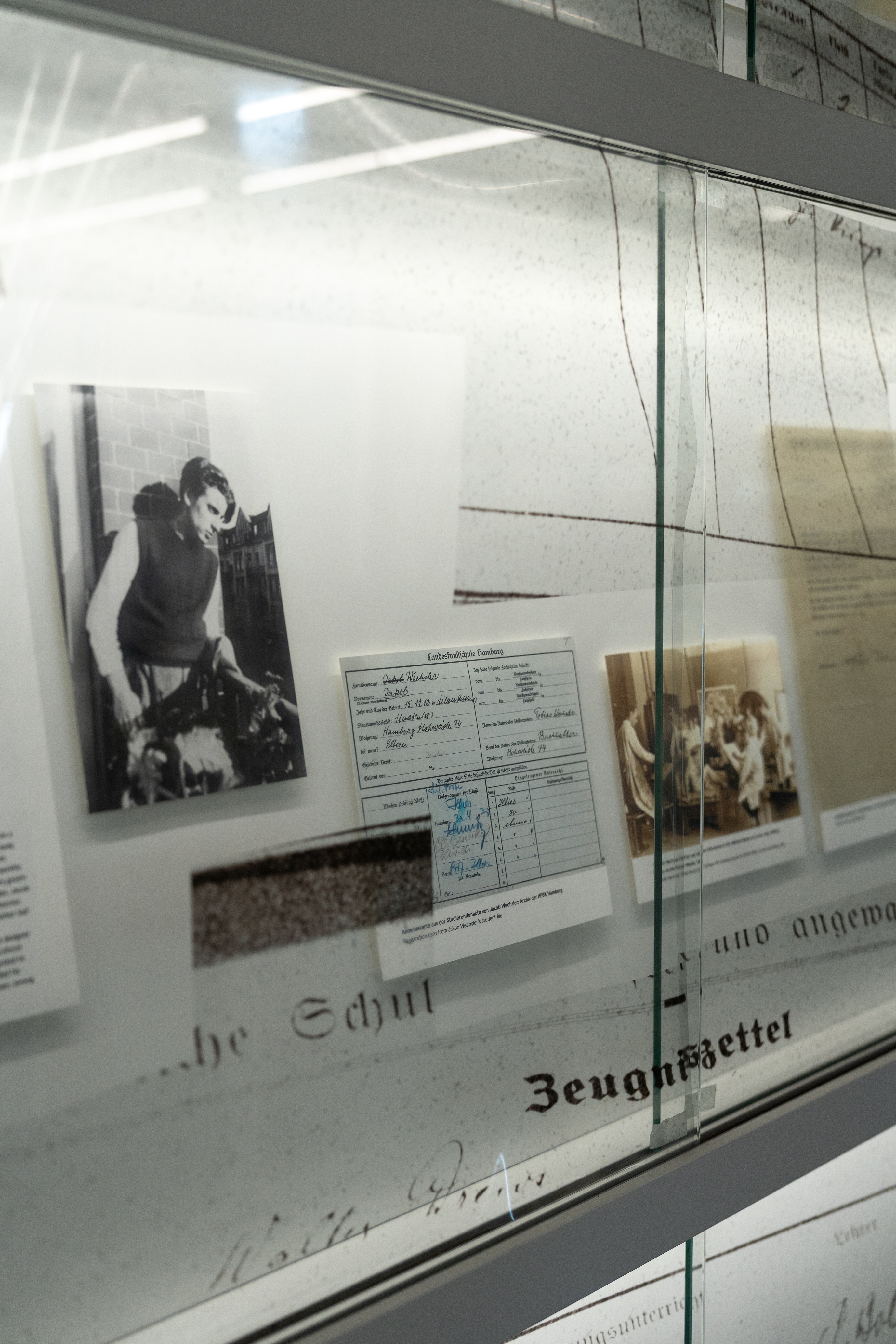
Through the seven case studies presented here—individuals whose life paths were severely impacted or even cut short by university expulsion, displacement, and deportation—the presentation aims to adopt the perspective of those who play a decisive role in shaping the essence of an art academy to this day: the students.
Concept: Sabine Boshamer, Marlene Kirsten, Julia Mummenhoff
Exhibition design and Reproductions: Tim Albrecht
Thank to: Dietrich Banse and Geschichtswerkstatt Uelzen, Peter Degkwitz, Corry Guttstadt, Alina Laura Just, Alisa Navot (Israel), Felix-Nussbaum-Gesellschaft (Osnabrück), Nora Sternfeld, Itamar Wexler (Tel Aviv), Ingo Wille.